
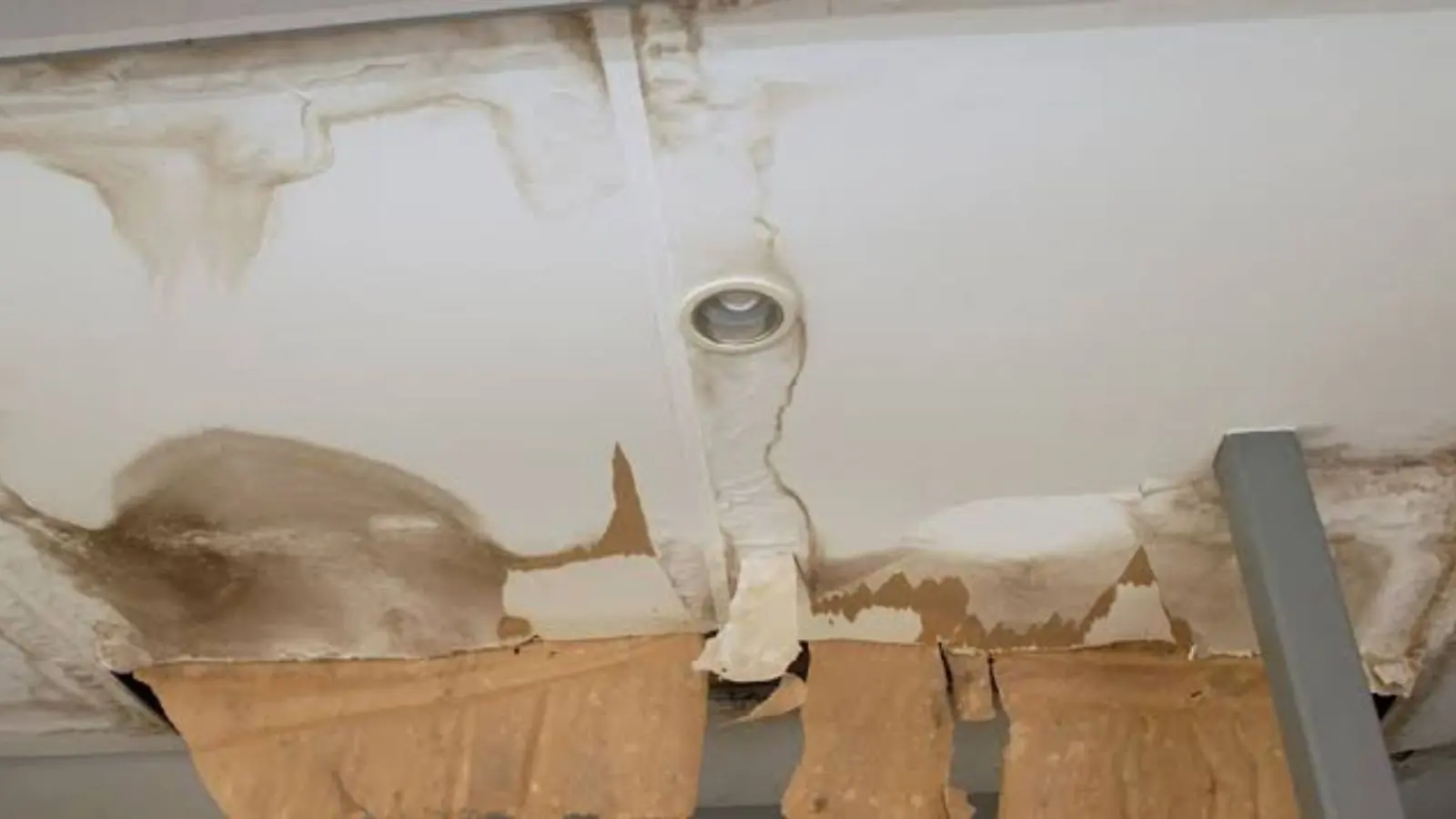
Water damage repair in Colton, CA is the rebuilding stage of a water loss. It starts after the leak is stopped and the structure is dry, and it covers drywall, ceilings, insulation, baseboards, flooring, cabinets and paint. If water is still spreading or materials are still wet, the job belongs to water mitigation first, because repairs built over damp framing tend to fail.
Repair is the quietest part of a restoration, but it is where most of the cost and most of the mistakes sit. A patch that hides a damp cavity can grow mold behind fresh paint. A floor that is replaced before the subfloor is dry cups again. This page explains how repair scope is decided, what is saved and what is replaced, and how the price is set.
Our dispatch line answers 24/7, and repair work is scheduled after an assessment, usually on a planned basis rather than as an emergency. If you are looking at active water right now, call first and read this page afterward.
Why repair scope in Colton depends on the building, not just the stain
The 2020 census counted about 16,600 housing units in Colton, roughly 50 percent owner occupied and 50 percent rented. For a tenant, a repair usually runs through a landlord or property manager, so a written scope and dated photos save real time.
Median owner-occupied value in the city runs about $443,800 according to Census QuickFacts. At that value, matching existing trim, texture and flooring matters, and a cheap patch can lower resale appeal. We describe in writing what will be matched and what will only be made sound.
Older blocks near Eighth Street and H Street can hide decades of remodeling behind the walls. Before any ceiling or wall is closed back up, we open a small test area and read the cavity with a moisture meter, because a surface that looks sound can still hold damp insulation underneath.
Signs the damage needs repair, not just drying
- A ceiling stain with a ring or brown edge, especially one that grows after rain or after the upstairs shower runs.
- Drywall that feels soft, crumbles at the paper face, or has bubbling paint and loose tape seams.
- Baseboards that have swollen or pulled from the wall, or trim that has opened up at the corners.
- Hardwood or laminate that cups, crowns, or lifts at the edges, and tile that sounds hollow.
- A musty smell that returns after cleaning, which points to a damp cavity that still needs attention.
Any one of these is enough to justify an assessment. Several together usually mean the material has to come out rather than be painted over.
How the repair scope and price are set
The assessment begins with a moisture meter and a thermal imaging camera. The meter gives a number for each material, and the camera shows where moisture sits behind a surface that looks dry. Readings are recorded and photographed so the scope has something to stand on.
From that record we write a scope: what is removed, what is dried in place, what is rebuilt, and what finish is matched. Nothing is priced until that scope exists, and you can compare the paperwork against your insurer's requirements. If a wall opens up differently than expected, we describe the change before doing the extra work.
Pricing depends on the factors in the cost section below, which is why we do not quote a number over the phone. To get a figure for your own ceiling or floor, call and describe what you see.
Ceiling and Wall Water Damage Repair
Ceilings fail first because water collects above them. A drywall ceiling that has been wet briefly and dried quickly can often be primed with a stain-blocking primer and repainted. One that has sagged, split at the tape, or stayed wet for days is cut out back to the nearest framing so the new board sits on dry, solid backing.
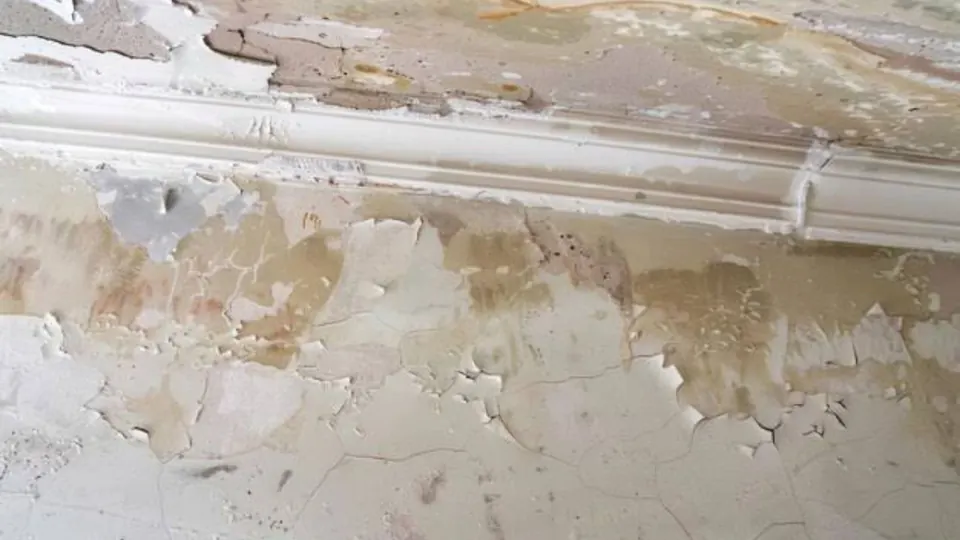
Walls follow a similar rule. Wicking draws water upward through drywall, so the visible line is rarely the real edge of the damage. A flood cut, a straight horizontal cut about two feet above the highest reading, removes the wet section and lets the cavity air out and dry before new board goes in.
Insulation is replaced when it has been soaked, because wet batts lose their value and hold moisture against the framing. New drywall is taped, mudded and sanded in coats, and the paint is matched to the room. Texture is the detail people notice, so we describe in the scope how ceiling texture will be blended.
If the stain came from a roof or an upstairs fixture, the source must be fixed before the ceiling is closed. Ask us how that sequence works for your layout.
Hardwood floor cupping and repair
Cupping happens when the underside of a board takes on moisture faster than the top, so the edges rise. Boards that cupped from a short exposure often flatten as the floor dries slowly over a few weeks, so sanding too early can leave a dip once they settle.
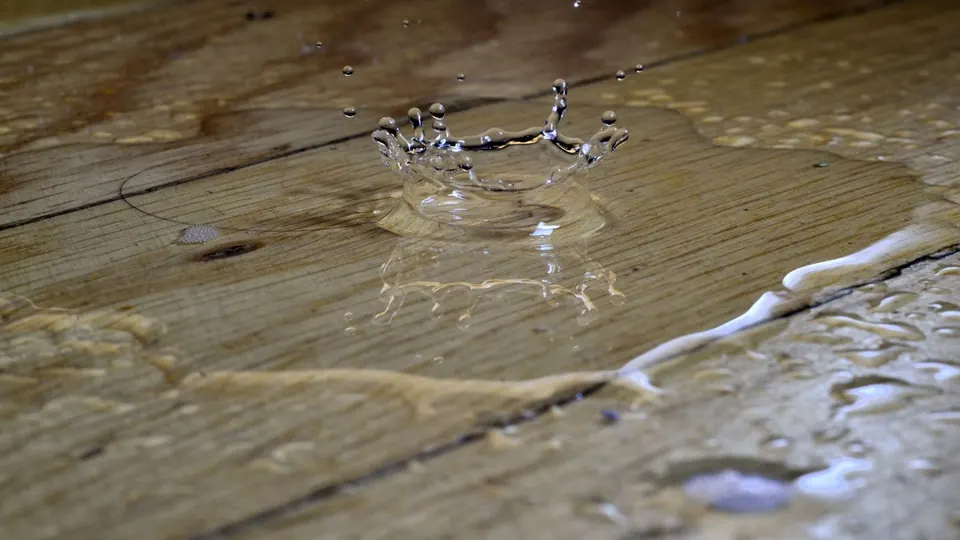
We read the moisture content of the boards and the subfloor before deciding. Floors that stay cupped after drying, or that have buckled off the subfloor, are replaced in sections and refinished to blend with the rest of the room.
Repair or replace: a decision table
| Material | Often saved when | Usually replaced when | What we check |
|---|---|---|---|
| Painted drywall | Briefly wet and now dry, no softness | Soft, crumbling, sagging or stained through | Moisture meter reading and paper face |
| Ceiling texture | Small patch that can be blended | Large area or sagging board | Framing contact and tape seams |
| Batt insulation | Only damp on one face and dried quickly | Soaked, matted or smelling musty | Weight and moisture in the cavity |
| Hardwood flooring | Light cupping that flattens as it dries | Buckled, delaminated or still wet | Boards and subfloor moisture content |
| Baseboard and trim | Painted, rigid, not swollen | Swollen, split or lifting from the wall | Back face and wall cavity |
| Carpet pad | Rarely saved after a soak | Almost always after any soaking | Source of the water and how long it sat |
What affects the cost of water damage repair
Water category
Clean water from a supply line is repaired differently from water that carried sewage or contamination, which requires more removal.
Affected area
A single ceiling patch and a whole room of drywall are different jobs, and the number of connected rooms changes the total.
Materials involved
Drywall, plaster, hardwood, engineered flooring, cabinets and tile each have different removal and replacement costs.
Drying already done
A structure that was dried properly needs less removal than one that sat wet, so earlier mitigation lowers repair scope.
Finish matching
Texture, paint blending, trim profiles and flooring species affect labor even when the damaged area is small.
For a number that fits your house, call and describe the damage. We will book an assessment so the figure rests on readings rather than guesses.
Insurance and repair paperwork
Check your policy before repairs begin
A homeowners policy often responds to a pipe that bursts without warning, and often does not respond to a slow drip or deferred maintenance. Rising water from outside is a flood loss, which standard policies tend to leave out in favor of separate flood coverage. Your insurer can tell you what applies to your loss.
We document readings, photos and scope so you have something to send. We cannot promise any claim outcome.
What to do while you wait for the repair assessment
- Confirm the leak source is stopped. If a ceiling still drips after rain or after a fixture runs, repairs cannot begin.
- Photograph every affected surface from a few angles before moving anything.
- Move furniture and rugs off wet floors, and keep fans and open windows running if the weather allows.
- Do not paint or caulk over a stain. Sealing a damp surface can trap moisture in the cavity.
- Keep receipts for emergency steps, and write down the date and time the damage was found.
Repair crews serving Colton and nearby towns
We dispatch repair crews across Colton, ZIP 92324, and to nearby communities. Our San Bernardino service area page covers the neighboring city to the north, and the same process applies there.
If the damage is fresh, the better first call is emergency water removal, and if the walls only look wet on the surface, water damage cleanup covers sanitizing and deodorizing before rebuild. After a larger event such as the 2023 storm season, flood damage restoration may apply.
Call the 24/7 line whenever you are ready to book an assessment.
Frequently asked questions
Drying is enough when materials stay sound, such as a briefly wet wall with no softness. Repair is needed when drywall crumbles, ceilings sag, floors buckle or insulation stays soaked. A moisture meter reading tells which case you have.
Only when the board is sound, the source is fixed and the area reads dry. Painting over a damp or sagging ceiling hides the problem and can trap moisture. A stain-blocking primer helps only on dry, solid drywall.
We do not quote a number blind, because repair cost depends on materials, area, water category and how much drying is already done.
An assessment comes first: readings, photos and a written scope, with the price laid out before anything is torn out.
Boards that cupped from short exposure often flatten as they dry slowly over several weeks. We check moisture content in the boards and subfloor before sanding or replacing anything.
Matching is part of the written scope. We note paint, texture, trim and flooring blends, and we tell you in advance where an exact match is not possible.
A policy usually responds to a pipe that fails suddenly and usually does not respond to a leak that went unnoticed for months. Rising floodwater is a different kind of loss with its own policy. Your insurer decides what your policy pays, and we cannot predict that outcome.