
How an AC leak becomes water damage in a Colton home
An air conditioner pulls moisture out of the air as it cools, and that moisture, called condensate, drips into a pan and leaves through a small drain line. When the line clogs with algae and dust, or the pan rusts through, the water goes where the equipment sits: an attic, a closet, a wall cavity or a ceiling.
Colton systems run hard. NOAA climate data for the San Bernardino station, from the 1971 to 2000 normals, lists average daily highs of 96.0 degrees in July and 96.2 in August. A unit that cycles most of the day in those months makes far more condensate than one running a few hours, so a drain line that was marginal in spring can overflow by midsummer.
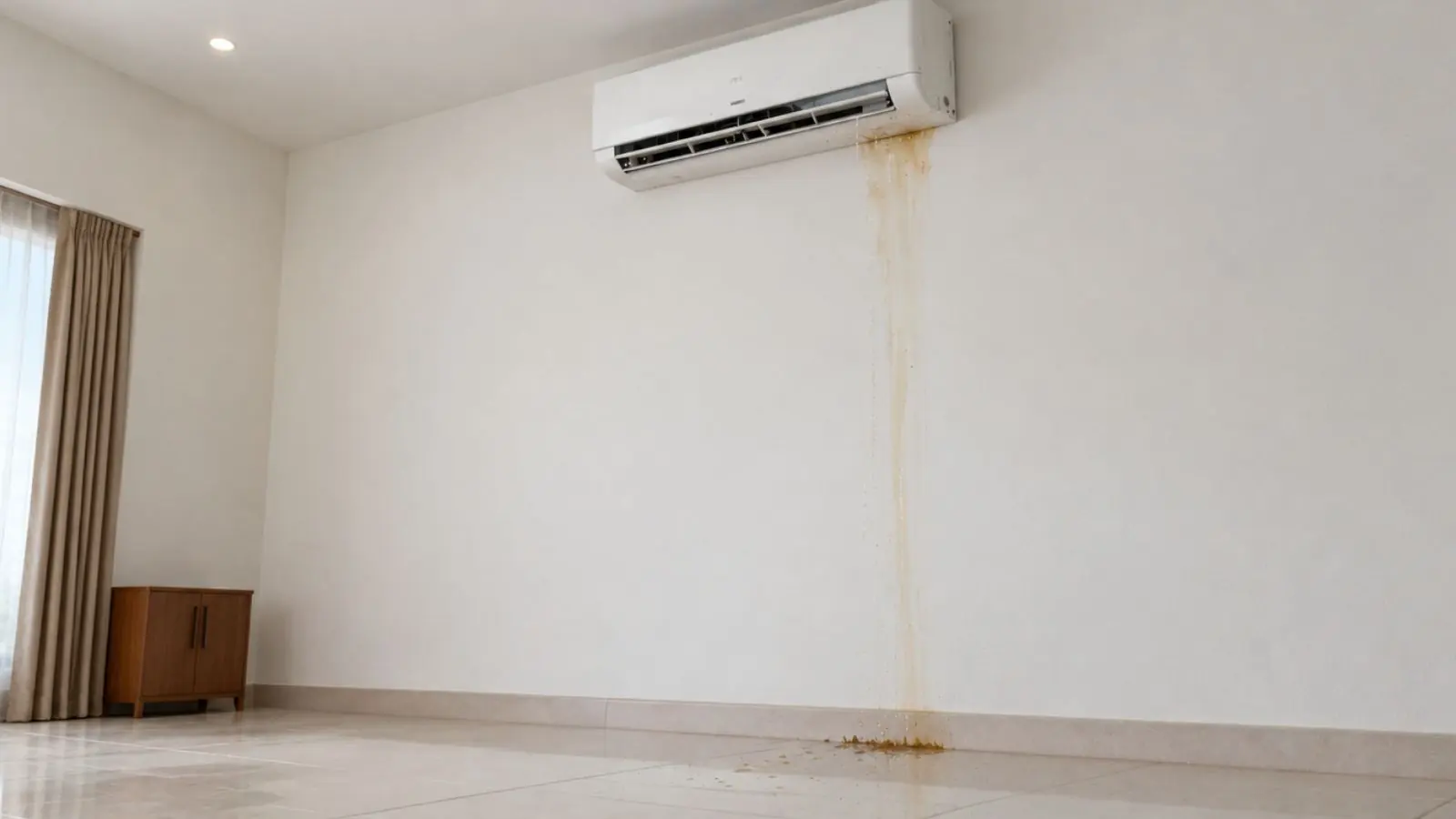
Equipment location decides the damage. An attic air handler leaks onto insulation and a ceiling, a closet unit leaks into carpet and baseboards, and a ductless wall unit streaks the wall below it. Each pattern needs a different drying plan, and none of them is a roof leak, which has a different source and a different fix.
Where the water goes and what it looks like
Match what you see to the likely source before you call anyone. It helps the HVAC technician and our crew start in the right place.

| Equipment location | What you see | Likely cause |
|---|---|---|
| Attic air handler. | Brown ring, bubbling paint or a soft ceiling below the unit. | Clogged drain line or an overflowing pan. |
| Closet or hallway air handler. | Damp carpet, swollen baseboard or a musty closet floor. | Blocked drain or a rusted pan. |
| Ductless wall unit. | Water streaks or a stain running down the wall. | Kinked or blocked drain hose, or a unit out of level. |
| Ceiling register or duct. | Drips or wet insulation around a vent. | A sweating duct or a gap in duct insulation. |
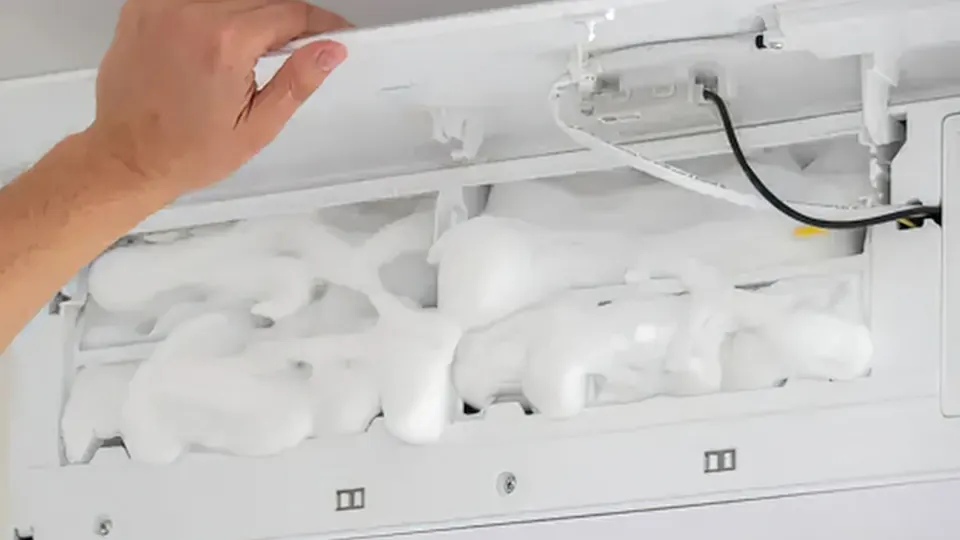
| Any unit after it stops. | A puddle that grows once the system is off. | A frozen coil thawing, often from restricted airflow. |
Why AC leak damage shows up days after it starts
A pan can overflow slowly for weeks above a ceiling. Attic insulation soaks up the water first, the drywall absorbs it from above, and the stain appears only after the board is saturated. By then the wet area is usually larger than the stain.
The delay matters for mold. The state insurance department's residential claims guide observes that water damage pointing to leakage over time may already involve mold. That is one reason a stained ceiling deserves a moisture reading instead of a coat of paint.
When an AC leak needs a call right now
A bulging ceiling, water dripping through a light fixture or a closet floor that stays wet after the unit stops all need a quick call. The line is answered at every hour, including nights and weekends, and any free crew can be out that same day.
A faint stain with no drip is less urgent but still worth a reading. Wet insulation keeps working on the drywall long after the unit is fixed.
First-hour safety steps for an AC leak
An air handler is electrical equipment sitting above or beside water, so the order of steps matters.
- Turn the system off at the thermostat, then trip its breaker if the panel sits somewhere dry that you can walk to. A running blower pushes more water out of the pan.
- Stay out from under a bulging or dripping ceiling. Water-loaded drywall can fall without warning.
- If water drips through a light fixture or you see sparks, step away and ring 911 or the city's electric utility before anyone else.
- Do not climb into the attic to look. It is hot, the ceiling below is not a floor, and the wiring may be wet.
- Catch drips with a bucket where it is safe, move belongings away, and photograph the stain, the unit and the drain line.
- Call an HVAC technician for the unit and call us for the wet building materials.
That guide also warns that homeowners policies may not pay for ensuing damage when reasonable steps were skipped. Shutting the system off and documenting what you see are part of those steps.
What our crew does and where the HVAC technician fits
The HVAC technician clears the drain line, replaces a failed pan, checks the coil and installs or tests a float switch that stops the unit when the pan fills. We do not repair air conditioning equipment. We handle the building materials the water reached.
Crews scan the ceiling and walls using moisture meters plus a thermal camera, then opens saturated drywall or insulation. Wet attic insulation holds water and rarely dries well, so it is often removed. Air movers and LGR dehumidifiers dry out the cavity, and the readings from each visit are compared with the goals in ANSI/IICRC S500, the published water damage reference.
Once the materials read dry, the ceiling can be patched and repainted. That work belongs to our water damage repair service, and the drying stage follows the process on the water mitigation page.
What changes the cost of an AC leak job
Where the unit sits
An attic air handler needs ceiling access and insulation handling, while a closet unit mostly means flooring and baseboards.
Area of wet drywall
A stain the size of a plate and a saturated hallway ceiling are different scopes even when the cause is the same.
Attic insulation
Soaked insulation is usually bagged and removed, and the volume depends on how long the pan overflowed.
How long it leaked
A leak caught in a day is mostly a drying job, and one that ran for weeks may involve replacement.
Mold growth present
Visible growth adds containment and cleaning steps and may call for a different scope.
The coordinator lays out scope and price before a crew starts. Describe the stain and the unit location, and the coordinator will walk through what moves the total.
AC overflows and your policy
Sudden overflow versus a long neglected drain
A pan that cracks overnight or a drain that overflows during a heat wave usually reads as sudden in policy language, and many policies respond to the resulting damage. A line left clogged for a long season, or a stain ignored after the first sign, may be treated as gradual or maintenance related. Check the exact policy wording with your insurer.
AC water is not flood water, so a flood policy is not the question. Keep the HVAC technician's invoice, photographs of the pan and drain, and our moisture log so the file shows the cause and the extent.
Prevention: keep the condensate line clear
- Have the drain line flushed and the pan checked before the hot season starts.
- Ask the technician to fit a float switch or pan sensor on attic and closet units.
- Change filters on schedule, because restricted airflow can freeze a coil that later thaws into the pan.
- Look at the ceiling under the attic unit and the closet floor once a month in summer.
- On ductless units, keep the drain hose sloped and free of kinks.
Colton is split almost evenly between owners and renters. The 2020 census counted about 50.4 percent of households as owners and 49.6 percent as renters. In a rental the landlord usually owns the unit, so report a leak in writing the day you see it and photograph the stain.
AC leak help in Colton and nearby towns
Crews work across Colton and also drive to Rialto and Loma Linda when an air handler has soaked a ceiling there.
Tell dispatch where the air handler sits and where the stain first showed.
Frequently asked questions
Someone answers at every hour, and when a crew is free it leaves the same day. Tell the dispatcher where the unit sits and whether water is coming through a light fixture.
Sparks or a burning smell mean 911 first and our line second.
An HVAC technician handles the unit, the drain line, the pan and the float switch. We handle the wet insulation, drywall, flooring and baseboards the water reached. The two jobs happen side by side, and we coordinate drying around the technician's visit.
Timing and location help. An AC stain tends to appear in summer near the air handler or a duct run and grows while the unit runs. A roof stain usually follows rain. A moisture reading and a look in the attic settle the question, and the source decides who repairs it.
Sometimes. If the board is firm and readings drop with air movement and dehumidification, it can stay and be repaired. A sagging or crumbling board is removed. Wet insulation above it is usually replaced either way.
Mold needs moisture, and saturated insulation, drywall or carpet can supply it. We do not diagnose health effects. We dry the area quickly, look for visible growth during the work and tell you when the situation calls for a mold assessment.
A frozen coil can thaw into the pan after the system stops, and a pan already full will keep draining. Both are HVAC problems for a technician. Switch the system off, catch the water and call us if materials are wet.
Coverage turns on the policy wording and on whether the leak was sudden or slow. A policy may pay for a sudden overflow and exclude long seepage or neglected maintenance. Read it, call your insurer and hold on to the technician's invoice and your photos.