
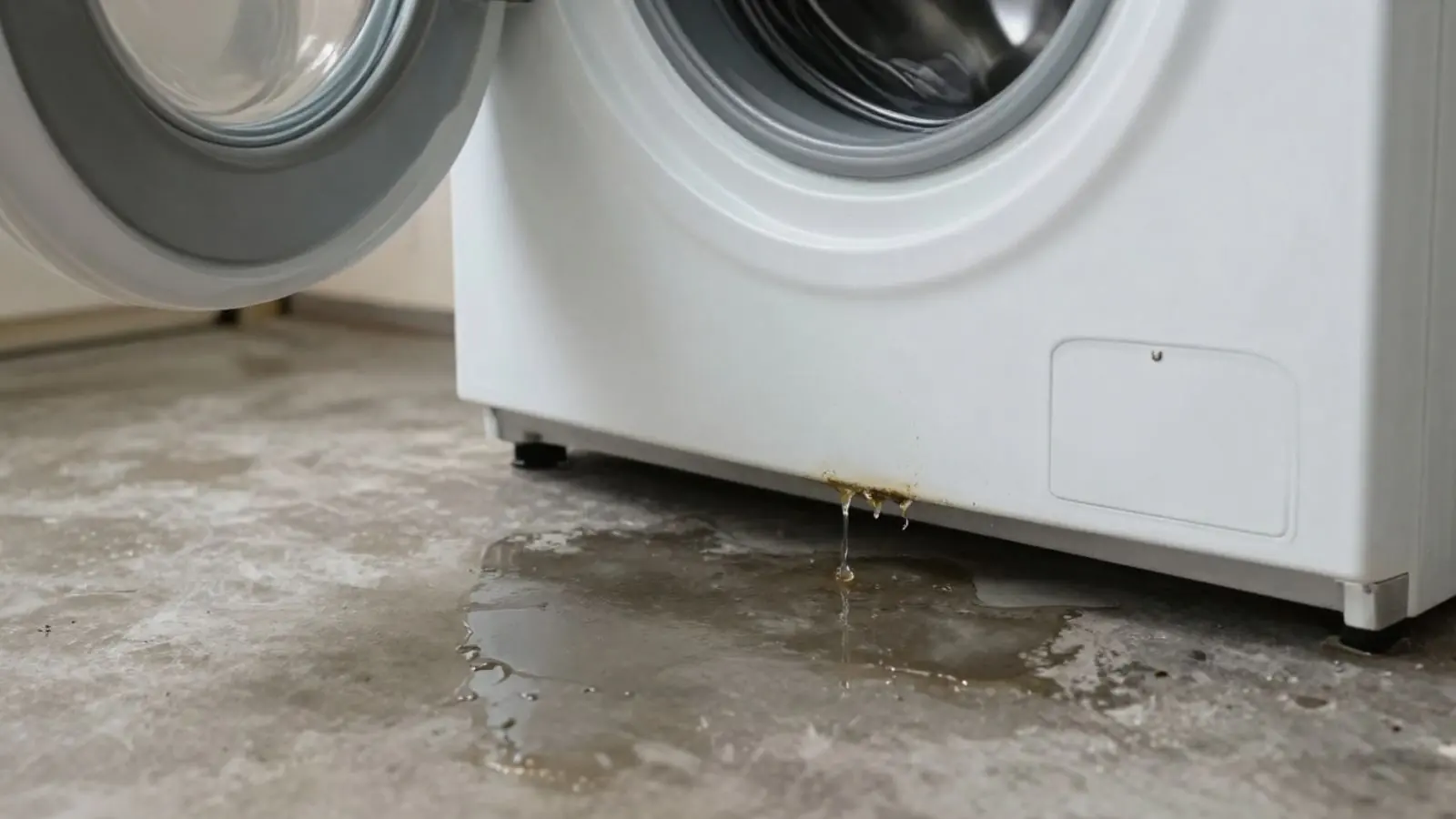
Appliance leak water damage in Colton, CA: how these losses start
Appliance leaks are quiet losses. A washer hose weeps behind the machine for weeks, a dishwasher seal lets go during a cycle, or a refrigerator line drips under the toe plate where nobody looks. Our 24/7 line takes appliance leak calls across Colton, CA, and an available crew goes out the same day.
What makes these losses different from a burst pipe is how slowly they can build. Water spreads under flooring, wicks into the bottom of cabinets and drywall, and feeds odor and mold long before a stain shows. The sections below go appliance by appliance, because each one fails in its own way.
Washing machines: supply hoses and drain standpipes
The washer is the biggest source of appliance floods. Rubber supply hoses stay under full line pressure all day, and a bulge, a cracked collar or a loose coupling can release water the moment the valve is open. A drain hose that slips out of its standpipe sends a whole rinse cycle onto the floor.
Laundry rooms in Colton homes often sit next to bedrooms or on a slab beside an attached garage. Water follows the lowest path, so it may reach a hallway carpet before the laundry floor looks bad. If a machine overflowed, check the walls on both sides of the room.
Dishwashers, refrigerators and ice-maker lines
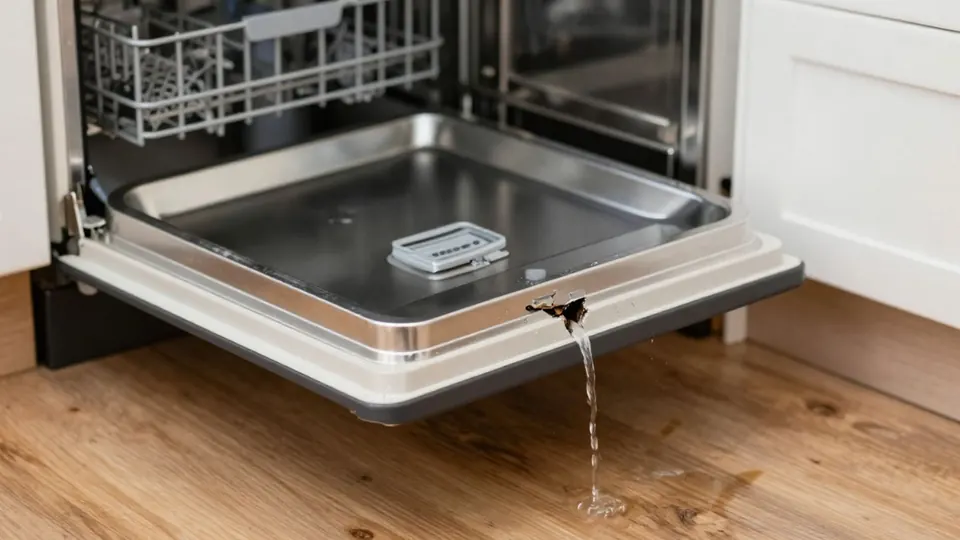
Dishwasher leaks usually start at the door gasket, the inlet valve or the drain connection under the sink. The water collects on the subfloor beneath the unit, where flooring edges swell and cabinet bases darken. Pulling the kick plate can show a stain that the floor surface hides.
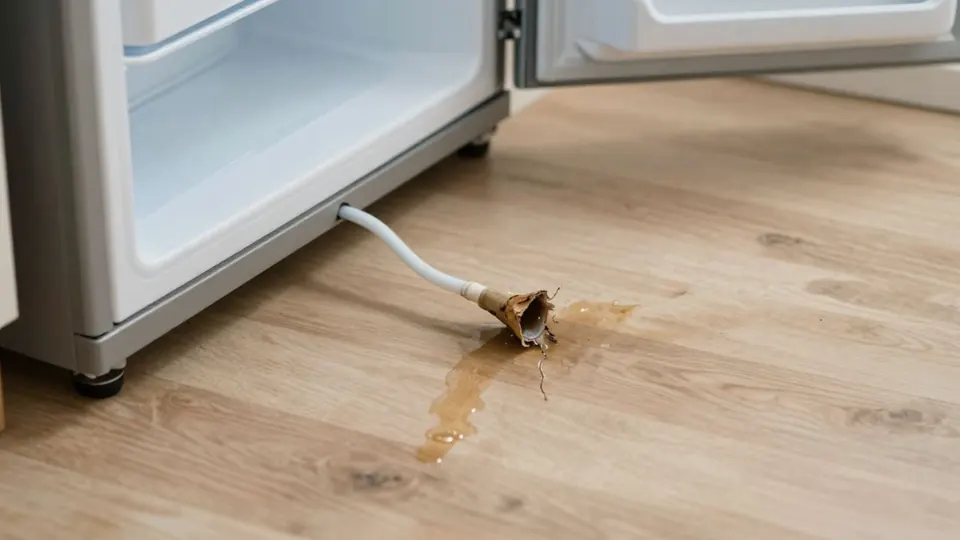
Refrigerator leaks come from the thin plastic or copper line that feeds the ice maker and water dispenser. A pinched, kinked or brittle line may drip slowly for months behind the fridge. Moving the refrigerator out and checking the floor and the wall behind it is the simplest test.
Water softeners and reverse osmosis units add more connections, drain lines and tanks to the mix. A cracked fitting under a softener can run into a garage slab or a utility closet without a sound. If you own one, look at the floor around it as part of any leak check.
Slow leak or sudden failure: how each one shows up
| Appliance | Common failure | How it shows |
|---|---|---|
| Washing machine | Cracked supply hose or loose drain hose | Sudden pool at the front, or a damp wall near the hose box |
| Dishwasher | Door gasket, inlet valve or drain connection | Swollen floor edge, dark cabinet base, musty smell under the sink |
| Refrigerator | Ice-maker or dispenser line | Warped flooring behind or beside the unit |
| Water softener or RO unit | Cracked fitting, loose drain tube | Wet slab or mineral crust at the base |
| Any appliance | Seal or fitting that weeps | Stain that returns after you dry it |
Sudden failures are easier to spot and tend to wet a larger area quickly. Slow leaks affect a smaller area but go deeper into flooring and framing, and they are more likely to involve mold.
Hidden signs of an appliance leak
- Flooring that has lifted, cupped or turned soft near an appliance.
- A musty smell in a laundry room or kitchen that does not clear after cleaning.
- Paint bubbling, or drywall that feels cool and soft at the base.
- A water bill that climbs while the family's habits stay the same.
- Baseboards that have stained, swelled or pulled from the wall.
The city's water conservation advice is to listen and look for leaks inside and outside the home and to know where your private shut-off valve is. That habit is the cheapest early warning there is.
Safety first: electricity and heavy appliances
Appliances plug into outlets, and the outlets sit low where water collects. Take these steps before touching anything.
- Shut the stop valve behind the appliance. If there is none, shut the main valve to the house.
- Pull the plug only when the outlet is reachable without standing in water. If it is not, use the breaker at a dry panel or ask the electric utility for help.
- Do not tilt or drag a full or running appliance. Washers and dishwashers hold water, and the weight can hurt your back.
- If you hear buzzing, smell burning or see sparks, step out of the room and ring 911 or the utility, then phone us.
- Photograph the appliance label, the leak and the wet areas before cleanup begins.
Water and power do not mix
Treat any wet outlet, power strip or extension cord near an appliance leak as live. Our crews wait for the area to be made safe before running drying equipment.
How we dry an appliance leak
The appliance is pulled out so the floor beneath it can be read. A moisture meter checks the flooring, subfloor and the base of nearby walls, and infrared imaging reveals cool, wet zones that look dry to the eye.
Wet material that cannot dry in place, such as swollen laminate or soaked pad, comes up. Air movers then drive air over the floor and under the open wall base, and LGR dehumidifiers draw the moisture out of the room. ANSI/IICRC S500 is a published industry standard that guides how drying is planned and measured.
Once readings match dry material, equipment leaves and the appliance can go back. If cabinets or flooring need rebuilding, water damage repair covers that stage, and water damage cleanup handles removal of anything ruined.
What changes the cost of an appliance leak
How long it leaked
A leak caught within a cycle wets a floor. A leak that ran for weeks reaches subfloor and wall bases.
Flooring type
Vinyl plank, tile and concrete respond differently than carpet, laminate and wood.
Whether cabinets are involved
Water that reaches cabinet bases or a toe kick adds removal and drying steps.
Adjacent rooms
A laundry room next to a hallway or bedroom can double the area to dry.
Equipment days
Wet flooring layers take longer to dry than a wiped puddle, and readings set the end date.
For a real figure, call with the appliance and the room in mind. The scope and price are explained up front.
Insurance, renters and landlords
A burst hose or similar abrupt failure is the type of loss policies often treat as accidental, while a seep that ran for months often is not. Read the policy, put the question to the insurer and keep photos of the appliance, the hose and the wet areas.
Census Bureau QuickFacts for Colton put the 2020 to 2024 owner-occupied rate at 52.8 percent, which means close to half of households rent. Tenants should alert the landlord right away. Renters coverage usually protects belongings, and the building belongs to the owner.
Common mistakes and prevention
- Mopping up and moving on. Water that went under flooring keeps working after the surface is dry.
- Running the machine again to see whether it leaks. Test with a towel and a flashlight first.
- Leaving old rubber washer hoses in place for a decade.
- Running the dishwasher or washer while nobody is home.
Braided stainless hoses outlast rubber, and the date on a hose is worth a look. A shallow pan under a washer with a drain line, a water alarm behind the fridge and a yearly pull-out check catch most leaks while they are small. Close the stop valves before long trips.
Appliance leak response around Colton
Crews serve Colton and nearby towns. Whether the leak is in Bloomington or Grand Terrace, tell dispatch which appliance failed and which floor it sits on. A leak that began in a kitchen cabinet run is covered on the kitchen water damage page.
Frequently asked questions
Staff pick up around the clock for this kind of call, and an open crew can reach you the same day. Close the stop valve first, then name the appliance that failed.
A wet outlet or a burning smell puts the utility or 911 ahead of us in the call order.
Yes. A supply hose sits under full line pressure whenever the valve is open, and a failed one can run until someone closes it. Closing the valves between loads or when away limits that.
Look for damp flooring or a stain beside or behind the unit. Pull it out and check the thin line feeding the ice maker.
Not always. Tile, concrete and sealed vinyl often dry in place. Laminate, wood and carpet pad usually fare worse, and a moisture reading shows which is which.
That depends on the lease and on the cause. Tell the property manager immediately, keep photos, and ask your own renter's policy about belongings.
A musty smell after drying can mean moisture remains in a wall base or under the floor. Call and we can re-read the area with a meter.