
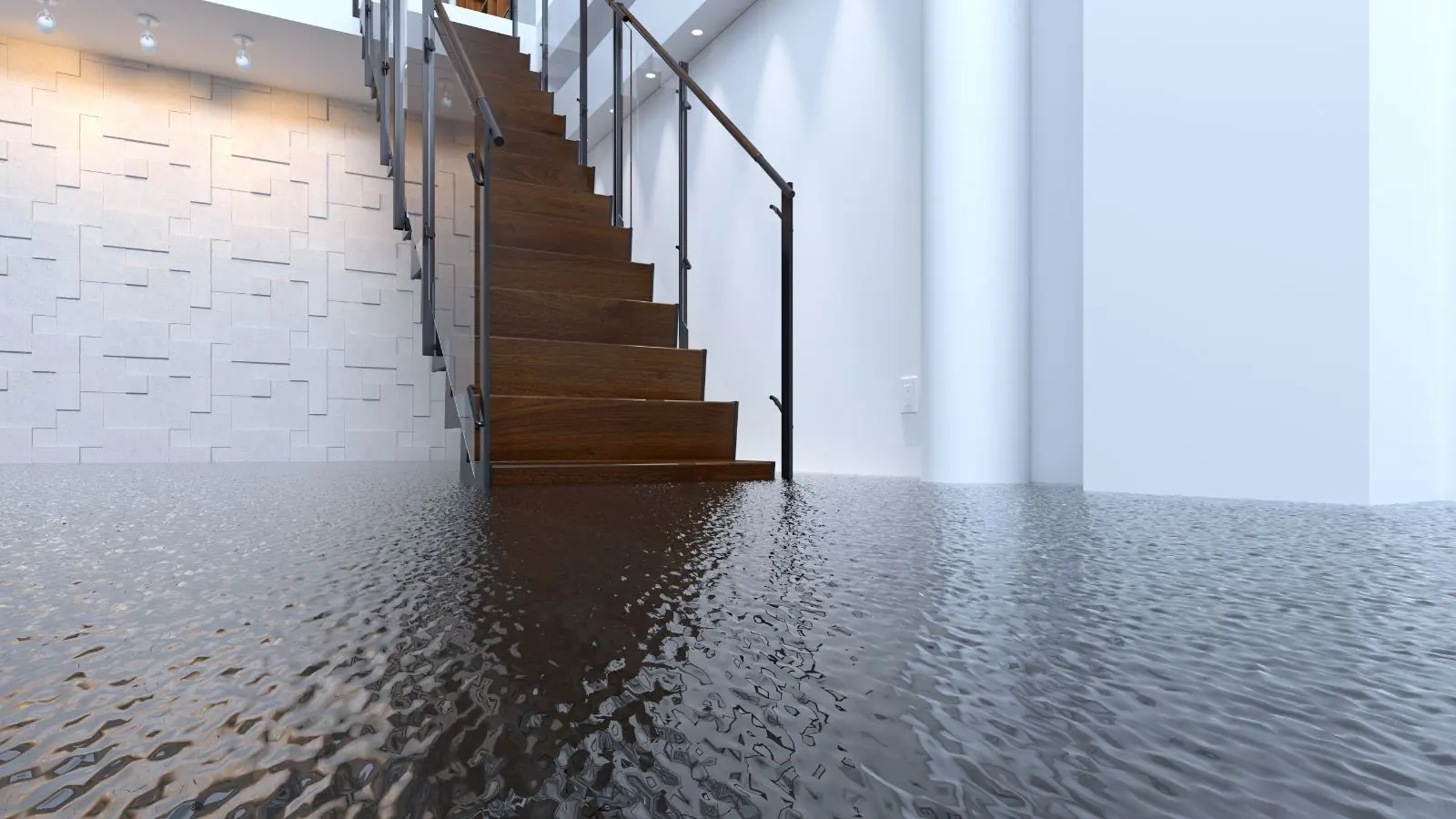
Commercial water damage in Colton, CA: what the work covers
Commercial water damage means water that has reached a business property: a retail unit, an office suite, a warehouse bay, a medical suite or a rental space with several tenants. The work is the same in principle as at a house. The source is stopped, standing water comes out, the structure is dried to a target, and ruined materials are removed.
What differs is the building. Commercial spaces have larger floor plates, suspended ceilings, slab floors under carpet tile or sealed concrete, shared walls with neighbors and a business that cannot simply close for a week. Our line answers 24/7, and the first call is about size, access and what still has to keep running.
A coordinator asks for the address, the water source if you know it, the approximate area that is wet and who holds the keys after hours. A crew then plans the job around those answers. Scope and price are explained before work starts, not after the equipment is already running.
How water reaches Colton commercial buildings
Colton has a mix of building ages. Eighth Street and H Street are the old downtown streets, and H Street is recorded as historic, so buildings of that age often have several generations of plumbing behind the walls. A leak in one tenant space can run along a shared wall into the next.
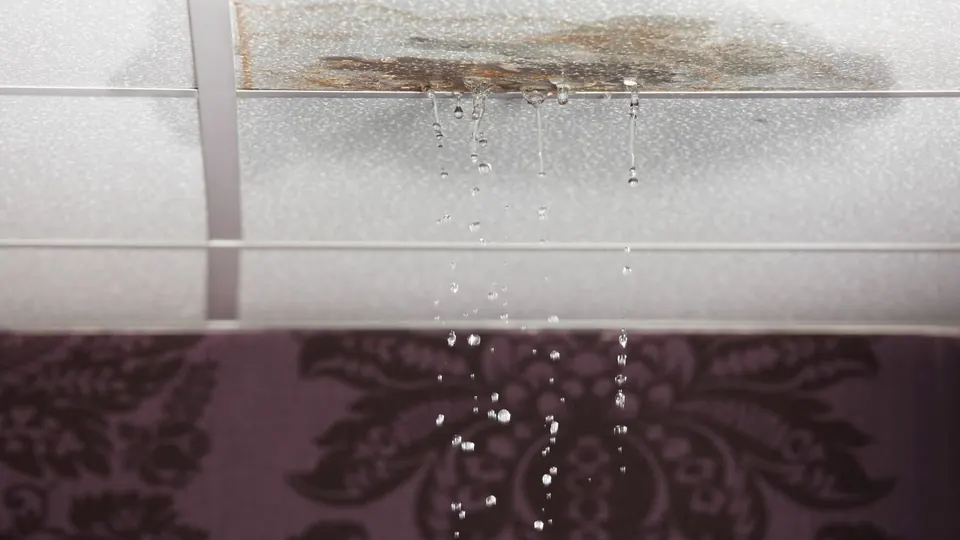
Southwest of downtown, the Agua Mansa area is an area settled in 1842 that now mixes older structures with newer tilt-up and metal buildings. Large flat or low-slope roofs collect rain in winter and shed it through drains and scuppers. When a drain clogs or a seam opens, water finds the ceiling grid first.
Four sources account for most commercial calls: a burst or failed supply line, a roof or drain failure during a storm, a fire sprinkler line that discharges or leaks, and a condensate or rooftop HVAC line that overflows. Each one leaves a different pattern, which is why the first walk-through matters.
Nearby Rialto has large distribution centers in its Las Colinas area, and a failed fire sprinkler fitting in a building that size can wet a wide span of floor. If your site sits near the border, our Rialto service page covers how crews approach that kind of building.
Reading the signs: what you see and what it usually means
Water damage in a commercial space rarely announces itself with a single puddle. These are the patterns crews see most often, and the first place to look for each.
| What you see | What it often means | First place to check |
|---|---|---|
| Ceiling tiles stained, sagging or dropping | Roof leak, overhead supply line or an HVAC drain that backed up | The plenum above the stain, then the roof drain nearest to it |
| Carpet tile curling or a dark slab edge | Water coming up through the slab or in from a wall | Wall base, floor joints and the nearest restroom or break room |
| Damp drywall at the base of a shared wall | A neighbor's leak or a pipe inside the wall | The adjoining unit and the plumbing chase |
| Water falling from a sprinkler head or pipe | Discharge from the fire line, often after impact or a cold event | The riser room and the nearest valve |
| Musty smell with no visible water | A slow leak in a hidden cavity or above a ceiling | Moisture readings above the grid and inside the wall |
A moisture meter and a thermal imaging camera turn those guesses into a map. Readings across the wet area show where the water stopped, which is the line the drying plan follows.
Commercial water damage safety: the first hour
Safety comes before the restoration call. Water and live circuits share a lot of commercial space, and electrical panels, server closets and rooftop units are often near the wet area.
- If you smell gas, see sparks or hear buzzing from a panel, leave the area and call 911 or the utility before you call us.
- Close the water shutoff for the affected line or the main shutoff for the building. If a fire sprinkler line is discharging, call 911 and your alarm company, because that line needs a qualified person to close it.
- Cut power to the wet area only from a dry panel you can reach without standing in water.
- Keep staff and customers out of wet areas, and keep people out from under sagging ceiling tiles.
- Photograph the damage, the source and the equipment affected before anything is moved.
Then call the 24/7 line. We explain what to protect first, such as inventory, records and electronics, and what to leave in place for the crew.
How a commercial job is run
Assess and map
Moisture meters and a thermal imaging camera mark the wet floor, wall base and ceiling. The map is photographed and becomes the baseline for every later reading.
Extract
Truck-mounted or portable extraction units pull standing water from slab, tile and carpet. Large open floors go faster with a wide-area unit than with a wet vacuum.
Remove what cannot dry
Wet ceiling tiles, insulation and soaked carpet or pad are cut out and bagged. Wall base may be removed so air can reach the cavity.
Dry and verify
Air movers and LGR or desiccant dehumidifiers run until readings reach the dry standard for that material. A crew checks at each visit and records the numbers.
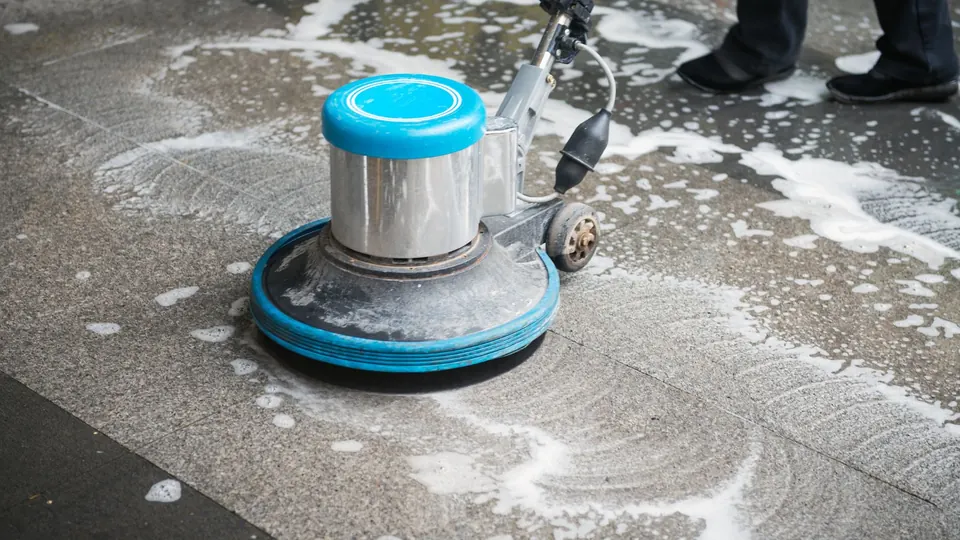
Crews work to the drying principles in ANSI/IICRC S500, the published standard for water damage restoration. Ask any company how it logs readings, because daily records are what let an owner or a manager show the drying was done.
Working around operations and after-hours access
A closed door is expensive, so the plan starts with what the space must do tomorrow. One option is to dry the wet zone first and leave dry sections open behind plastic containment. Another is to work after hours, which needs a key holder, alarm codes and a quiet window for the equipment.
Air movers and dehumidifiers make noise and draw power, and most circuits in a retail suite are already loaded. Crews check the circuit before they plug in, and they may run equipment on separate lines. Ask about noise before a busy day, not after.
Phasing helps when the loss spans several rooms. Restrooms and corridors are dried first so tenants can use them, while a back storage room waits for the second visit. You decide the order, and the coordinator tells you what each choice does to the drying time.
What changes the cost of a commercial water job
Area and floor type
A wet slab with carpet tile is not the same job as a wet sealed concrete floor, and larger areas need more equipment days.
Water source and category
Clean supply water is simpler to handle than water that has crossed a floor drain, roof debris or a sewer line.
Materials that must come out
Ceiling grid, insulation, carpet and wall base each add removal, disposal and rebuild work.
Hours and access
After-hours work, phased access and key holder coordination change how many visits a job needs.
Drying time and equipment count
Dense walls and deep slabs take longer, and the equipment stays until readings reach the dry goal.
We explain scope and price before work starts. Want your real number for your building? Call and describe the space.
Commercial insurance in plain terms
Commercial property policies often respond to sudden and accidental water, such as a burst pipe or a sprinkler discharge. Slow leaks and maintenance failures are often treated differently, while flood from outside is usually a separate coverage. The California Department of Insurance makes that flood point in its homeowner guides, and commercial policies vary.
Policies differ, so check yours or ask your agent about deductibles and business interruption. We document readings and removals, and your insurer decides what is covered.
Owner, manager and tenant: who calls whom
Lease language usually decides who handles a water loss, so read it before the first call. In general terms, the property owner is often responsible for the roof, structure and shared plumbing, and the tenant is responsible for its own contents and improvements. Many leases also require prompt notice to the landlord.
When a leak crosses a wall, notify the neighbor and the property manager the same day. We can document what is wet on your side of the wall and note where the water appears to come from. The cause and the question of fault are for the parties and their insurers.
Keep a short record: who called, when the source was stopped, what was moved and which photos were taken. Our visit notes and moisture readings are written so a manager can forward them to an insurer or adjuster.
Mistakes to avoid and ways to prevent the next loss
- Do not wait for the landlord to act on a roof drain while ceiling tiles are already stained. Stained tiles hold water that drips onto the floor below.
- Do not run building HVAC until a crew checks it. Air handlers can spread moisture and odor through the space.
- Do not stack wet inventory against drywall to keep it off the floor. Wet cardboard feeds humidity back into the wall.
- Test the sprinkler riser room and floor drains each season, and walk the roof after storms. The City of Colton Building and Safety Division can tell you what permits apply to plumbing or fire line repairs.
Nearby sites carry their own patterns. Our San Bernardino page explains what that older commercial core looks like, and the emergency water removal page covers the pump-out stage in more detail.
Related services for commercial losses
A commercial job often moves through more than one service. Water sitting in a slab or under tile needs structural drying and dehumidification, and a loss with outside water may fall under flood damage restoration. Call the 24/7 line and the coordinator will sort which one applies.
Frequently asked questions
Yes. The dispatch line is answered around the clock, and a crew is sent the same day when one is open. Have the address, the approximate wet area and the name of a key holder ready.
Often, yes, for part of the space. Crews dry the wet zone first and can section off dry areas with plastic. Noise, power use and foot traffic are discussed before work begins so you can choose.
After-hours work can be planned when the space is easier to clear. It needs a key holder, alarm information and a quiet window for equipment, so give those details on the first call.
Visit notes, photographs, moisture readings and a list of materials removed. They are written for an adjuster or manager to read, and your insurer decides what is covered.
That depends on the lease and each party's policy. We document what is wet on your side and where the water seems to come from. Fault is for the parties and their insurers to settle.
The line may be tied to the fire system, so a qualified person has to close and restore it. We handle the water after that, which usually spreads wider and faster than a single pipe leak.
Yes. Dispatch from Colton reaches nearby towns, and the same process applies. The location pages for each town list the ZIP codes served.