
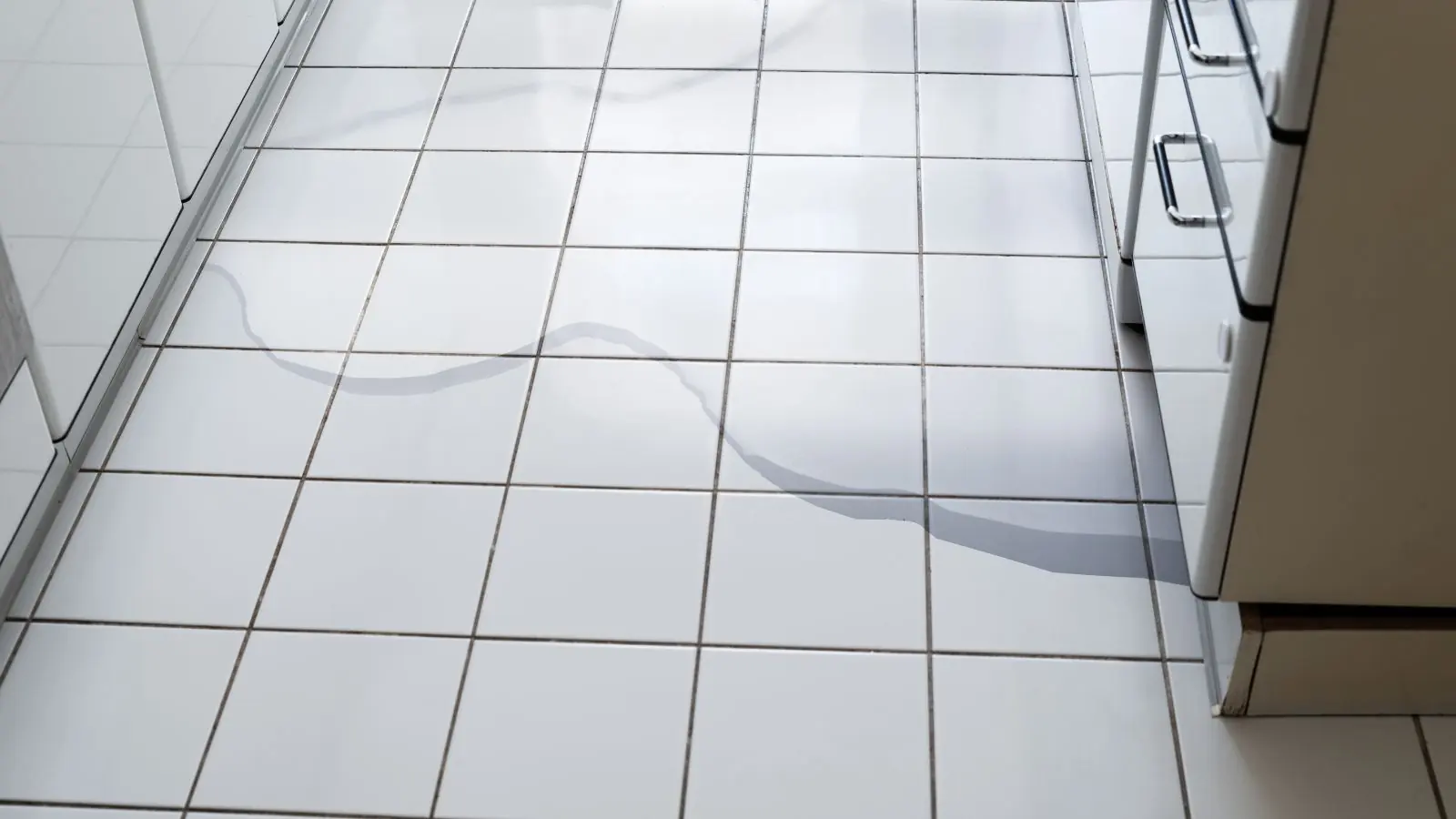
Why the kitchen is the hardest room to dry
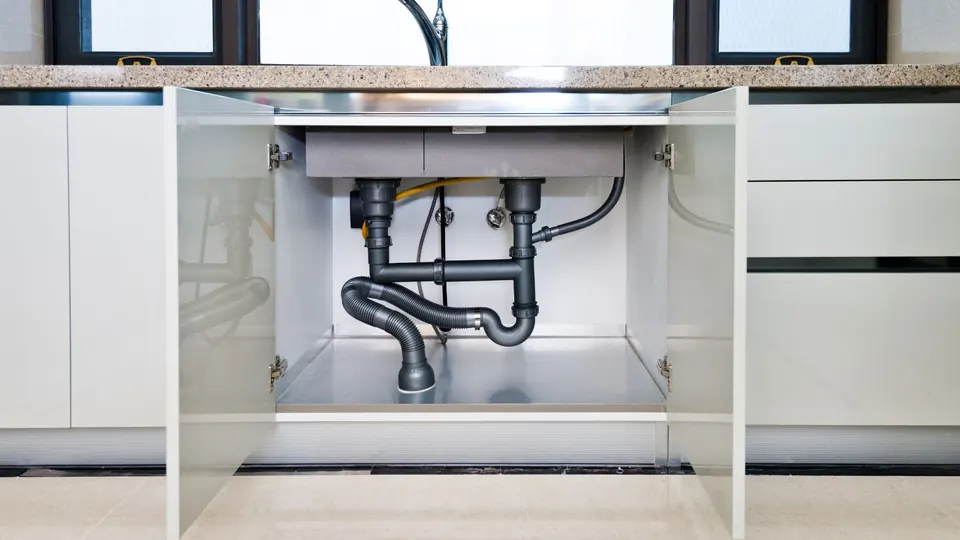
A kitchen holds more water connections than any other room. A sink and faucet, a garbage disposal, a dishwasher supply and drain, a refrigerator ice-maker line and sometimes a pot filler all sit inside or behind cabinets. A small drip at any of them can run for days before anyone opens the sink base.
The damage is hard to see because the materials hide it. Cabinet boxes, toe kicks, flooring, subfloor and the wall behind the cabinets form layers, and water moves sideways between them. A dry-looking floor can sit on a soaked cabinet base.
Homes here are a large asset. Census QuickFacts lists $443,800 as the 2020 to 2024 median for owner-occupied homes in Colton, and a good share of that worth sits in the cabinets and fixtures. Saving what reads dry is worth careful readings before anyone calls for demolition.
Follow the water from the sink base outward
This table lists the materials water meets in a kitchen and what usually happens to each.
| Material | What water does | Usual outcome |
|---|---|---|
| Particleboard cabinet boxes. | Swell, crumble at the edges and lose screw hold. | Often replaced once soaked. |
| Plywood cabinet boxes. | Resist swelling and dry well when reached early. | Often dried in place. |
| Toe kicks and cabinet bases. | Trap water under the boxes where it cannot evaporate. | Removed so the cavity can be dried. |
| Laminate and vinyl plank floors. | Swell at seams or trap water underneath. | Laminate usually goes, vinyl may lift for drying. |
| Tile and grout. | Tile survives, but the bed and subfloor under it stay wet. | Dried through the grout lines or pulled in sections. |
| Drywall behind cabinets. | Wicks water upward behind the boxes. | Cut out above the wet line if readings stay high. |
Where kitchen water usually comes from
Supply lines, faucet connections, disposal seals and drain traps under the sink account for many kitchen leaks, and a loose compression fitting can drip for weeks. A refrigerator ice-maker line is the quiet one, because the tubing runs behind the unit where nobody looks.
A dishwasher or refrigerator failure is a common source too. We cover appliance-specific detail on our appliance leak water damage page. This page covers the room itself: what the water did to cabinets, flooring and walls once it escaped.
First-hour safety steps in a wet kitchen
Kitchens mix water with gas ranges, electric ranges and plug-in appliances, so start with safety.
- Close the angle stop under the sink or behind the leaking appliance. If you cannot find it, close the main valve.
- If the floor is wet around a range, refrigerator or dishwasher, do not touch the appliance. Switch off kitchen breakers only from a dry spot.
- If you smell gas near a range, get out of the house and make the call to SoCalGas or 911 from the sidewalk.
- Water reaching outlets is an electrical hazard, so the emergency number or the city electric department comes before us.
- Empty the sink base, set the contents on dry surfaces and lift rugs and mats.
- Photograph the cabinets, the floor and any appliance label, then call us for drying.
How a crew dries a wet kitchen
A crew first scans with an infrared camera and a set of meters, charting the floor, the cabinet bases and the wall behind them. The map shows where the water went and which materials can be dried instead of replaced, before any cutting starts.
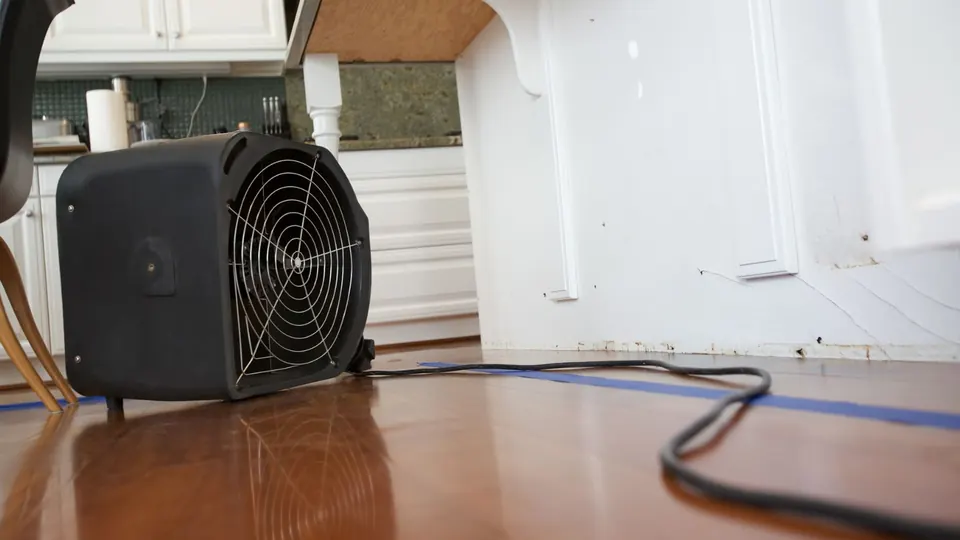
To reach trapped water, crews remove toe kicks and drill small openings in cabinet bases, or lift a section of flooring. Air movers push dry air through those openings and LGR dehumidifiers draw humidity out of the air. Forced-air drying systems can dry the cavity under cabinets without removing the cabinets, which is the goal wherever readings allow.
Particleboard boxes that stayed wet for more than a day are the usual casualties, while plywood and solid wood often survive. Readings are logged at each visit and measured against ANSI/IICRC S500, the industry's published water damage standard. Drying ends when the numbers say so, not when the surface feels dry.
Whole-room drying follows the same logic as structural drying. When ruined materials have to come out, the work overlaps with water damage cleanup.
What usually gets replaced and what often stays
- Often replaced: swollen particleboard boxes, wet insulation behind appliances, laminate flooring and saturated drywall.
- Often dried: plywood cabinet boxes, solid wood doors and face frames, tile, stone countertops and vinyl planks lifted early.
- Decided by readings: hardwood floors, countertop substrates and the subfloor below the cabinets.
What changes the cost of a kitchen water job
Cabinet material and run length
A short run of plywood boxes is a different job from a full wall of particleboard cabinets.
Flooring type
Tile, vinyl, laminate and hardwood each need a different approach, and floors under cabinets are the hardest to reach.
Water source and category
A clean supply leak is the easy case. Drain-line water brings sanitizing and extra removal.
Time since the leak
A leak caught the same day dries in place more often than one that sat for a week.
Wall and subfloor involvement
Wet drywall or subfloor behind the cabinets adds cutting, drying time and rebuild steps.
Scope and price are laid out by the coordinator ahead of any demolition. Describe the cabinets, flooring and water source, then ask which of them moves the total most.
Kitchen leaks and your policy
A burst line versus a slow drip
When a supply line splits or a dishwasher hose lets go, the loss is commonly seen as abrupt and many policies respond to it. A drip under the sink that went on for months tends to be viewed as gradual and may be excluded. The final word rests with your policy language and your insurer.
Water from kitchen plumbing is not flood water, so flood coverage does not come into it. The state insurance department's residential claims brochure suggests holding on to receipts for anything bought to protect the property, so file each one with the photographs and our moisture log.
Kitchen habits that make leaks worse, and checks that catch the next one
- Do not run a fan over the countertop and call it drying. Water under the cabinets needs openings and dedicated airflow.
- Do not reinstall toe kicks or caulk the floor edge while readings are high.
- Do not paint or caulk over a swollen cabinet edge. The swelling means the board is still wet.
- Check braided supply lines and shutoff valves under the sink for corrosion or beads of water every few months.
- Empty the sink base once a season and run a dry hand along the back wall and the pipes.
The state public health agency's mold FAQ says California neither licenses nor certifies mold assessors or remediators. So ask any company how it dries and documents, and have visible growth inside a cabinet assessed before anyone disturbs it.
Kitchen rebuilds and who to ask in Colton
New cabinets, rerouted plumbing or replaced flooring can trigger permits. Before ordering anything, ask the city's building department which of those steps need a permit or an inspection at your address.
Crews also serve San Bernardino and Bloomington when a kitchen leak soaks cabinets and floors there.
Tell dispatch what the cabinets and floor are made of.
Frequently asked questions
Someone answers every hour of the day, weekends included, and when a crew is free it can arrive that same day. Say what leaked and whether the floor is wet around a range or refrigerator.
A smell of gas means stepping outside first and ringing the gas company or 911 from there.
Often, if the boxes are plywood or solid wood and the water is reached early. Particleboard boxes that have been wet for a day or more usually swell and have to be replaced. Moisture readings decide, not the surface look.
Not always. Crews can remove toe kicks, drill small openings and push dry air under the cabinet bases. Cabinets come out only when readings show water trapped where airflow cannot reach, or when the boxes are too damaged to keep.
It depends on the material and the readings. Tile and vinyl plank can often be dried, and laminate usually cannot. Wet subfloor under the cabinets is read and dried in place when possible.
Close the valve that feeds the leak, empty the sink base, lift rugs and photograph the cabinets and floor. Stay away from wet appliances, and if outlets are wet or you smell gas, that call comes first.
Mold needs moisture, and a closed cabinet base that stays wet can supply it. A musty smell after a leak is a reason to have the cavity read and opened. We do not diagnose health effects, and we say plainly when growth needs a mold assessment.
The answer sits in your policy and in how the leak started. A burst line or hose is often treated as sudden, and a long drip may be excluded. Read the policy, ask your insurer and save receipts and photos.