
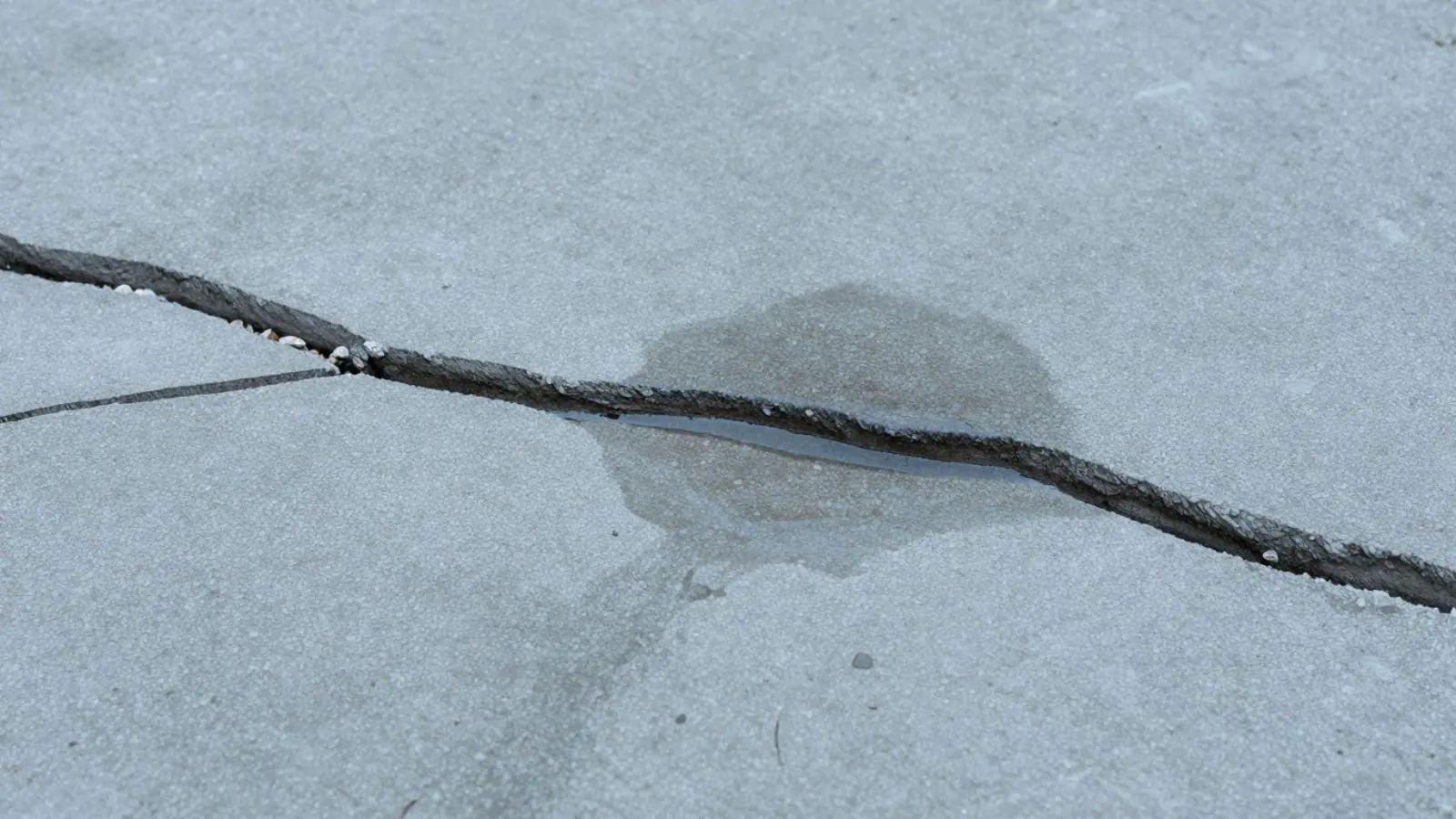
What a slab leak is and where it starts
A slab leak is a pressurized water line that fails inside or beneath the concrete floor of a house. Many single-story homes across Southern California sit on slabs, so supply and hot-water pipes often run in or under the concrete. No public source tracks slab leaks by city, so we will not quote you a Colton rate.
Plumbers name several causes for a failed under-slab line: pinhole corrosion in copper, abrasion where a pipe rubs concrete, a bad joint, and ground movement that stresses a fitting. Which one applies to your house is a question for the plumber who locates the break. Our work begins once water has reached the floor, the walls or the subfloor.
South Colton is the older part of town. The San Bernardino County history page on Slover Mountain says limestone quarrying began there in 1881 and the first cement plant west of the Rockies opened in 1894. Houses and small shops from those decades and after carry older plumbing, and age alone does not predict a leak, but older lines have had more years to wear.
Signs of a slab leak and what each one means
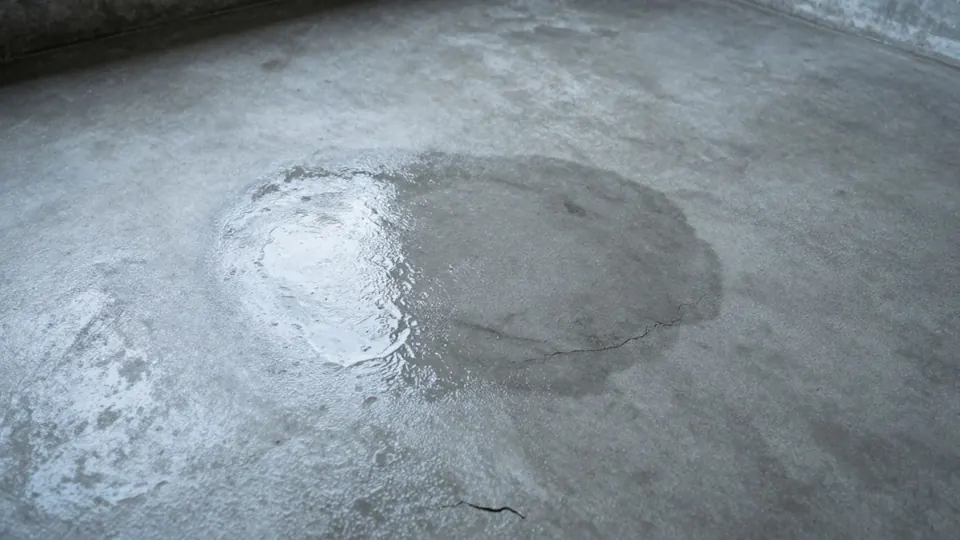
A slab leak rarely announces itself with a spray. It shows up as small changes that add up, so this table pairs each sign with what it may mean and the first move to make.
| What you notice | What it may mean | First move |
|---|---|---|
| Meter keeps turning with every fixture off. | A pressurized line is losing water somewhere. | Close the main valve and see whether the meter stops. |
| A warm or hot spot on the floor. | A hot-water line under the slab may be leaking. | Keep feet and pets off it and call a plumber. |
| Running water sound in a quiet house. | Water is moving through a pipe no fixture is using. | Close the main valve and listen again. |
| Damp carpet edge, lifting laminate or cracked grout. | Moisture is rising through the slab into the flooring. | Photograph it and call for moisture readings. |
| Musty smell along baseboards. | A wet wall bottom or damp cavity may be supporting mold growth. | Open the area to air and call for an assessment. |
When a slab leak is an emergency
A slab leak becomes an emergency when water comes up through the floor, pools at a wall base or soaks flooring in more than one room. Someone answers the phone all night and all weekend, and once a crew is free it heads out that day.
A slow slab leak behaves differently. The slab absorbs water for days or weeks, flooring loosens a little at a time, and the first hint can be a utility bill. Even a slow leak deserves a prompt call, because a wet slab keeps feeding the walls above it.
First-hour safety steps for a slab leak
Handle the water first and the power second. These steps apply to clean supply water only. Sewage or floodwater calls for the separate precautions on our sewage backup cleanup page.
- Find the main shutoff valve and close it. On its conservation page, City of Colton Public Utilities asks customers to learn where the private shut-off valve sits. Find yours now, not mid-leak.
- Water at an outlet, an appliance or the breaker panel means keeping out of that area and not touching switches. Ring the City of Colton electric utility or 911, then reach us.
- A gas odor means walking out of the house and phoning SoCalGas or 911 from the yard.
- Flip the breakers serving wet rooms only if the panel stands on dry ground that you can get to without wading.
- Lift rugs, shoes, electronics and cardboard onto dry surfaces, and photograph every wet area plus the meter reading.
- Call a licensed plumber for leak detection, then call us for drying and removal.
Hot water and live wiring
A leaking hot-water line can scald, and slab water can reach wiring in walls and floor outlets. Treat any wet outlet, warm puddle or crackling sound as an electrical hazard and leave the area.
Who finds the leak and what our crew does
Finding a leak under concrete is plumbing work. A plumber uses electronic listening gear, line pressure tests and sometimes thermal imaging to locate the break, and may route a new line through the attic or walls instead of cutting the slab. We do not replace pipe.
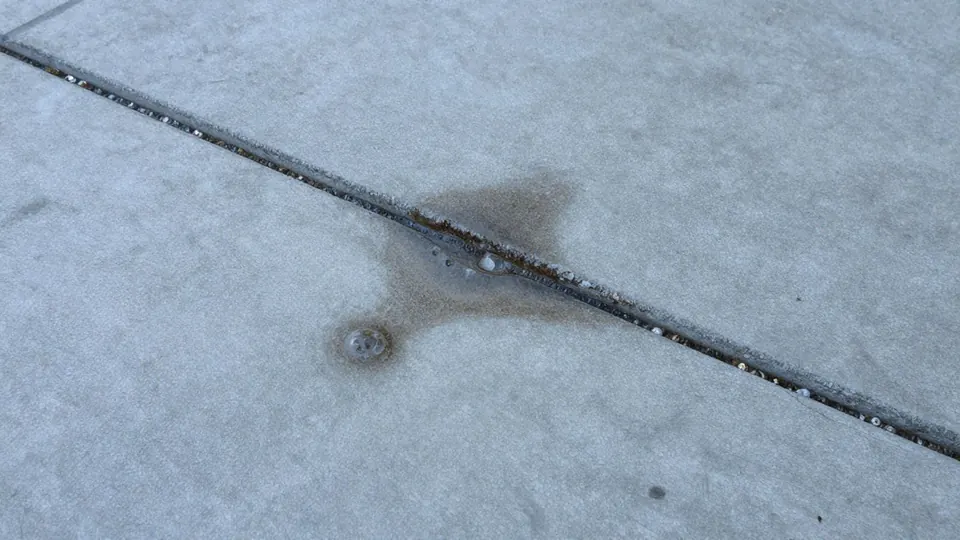
Our work is the water the leak left behind. A crew maps moisture with pin and pinless meters and a thermal imaging camera, pulls baseboards, and cuts small relief openings where water has wicked up a wall. Air movers and LGR dehumidifiers then dry the cavities and the room.
If the plumber opens the slab, expect concrete dust and a wet trench. We schedule drying around that work so the same room is not soaked twice. Equipment detail lives on our structural drying page, and a line that bursts inside a wall is covered under burst pipe water damage.
Flooring, baseboards and vapor from a wet slab
Concrete holds water like a sponge and releases it slowly as vapor. That is why flooring over a leaking slab can cup, bubble or lift weeks after the pipe is fixed. Tile may stay put while the grout and the thinset beneath it hold moisture.
What can be saved depends on material and time. Laminate and engineered wood swell at the edges and often go. Carpet and pad can be pulled and dried when the water is clean and the pad is lifted early, as described on our carpet water damage page. Solid hardwood needs readings before anyone decides.
We follow drying goals from ANSI/IICRC S500, the published reference for water damage restoration, and record readings at each visit. A slab that stays damp sends moisture into drywall bottoms and cabinet bases, and mold needs moisture, so drying the wall base matters as much as removing the visible puddle.
What changes the cost of a slab leak job
Slab leak jobs vary more than most water losses because the hidden path of the water is wider than the wet spot suggests.
How far the water traveled
One room and a hallway is a smaller job than a whole slab with water behind every exterior wall.
Flooring type
Tile, laminate, carpet and hardwood dry or fail differently, so the removal scope follows the floor.
Whether the slab is opened
A plumber cutting concrete adds dust control, wet debris and a second round of drying.
Hot or cold line
A hot-water leak adds humidity and warms the slab, which changes how drying is planned.
Time since the leak began
A leak found on day one is smaller than one that soaked the slab for weeks and reached the walls.
Scope and price are laid out before any work begins. A call to dispatch gets you a plain account of what is pushing your total up or down, with no blind guess.
Slab leaks and your policy
Sudden failure versus long seepage
Insurance often treats a sudden pipe failure differently from a leak that seeped for months. Many policies cover the resulting water damage when a line fails suddenly, and many exclude damage from long-term seepage. Finding and repairing the pipe itself is often handled separately from the damage it caused.
Plumbing water is not flood. The state's consumer claims guide says homeowners policies leave flood out but usually pay for other water damage. Read your policy and call your insurer before major repairs. We document with photos and moisture readings so the file shows what the water touched.
Mistakes to avoid and ways to catch a leak sooner
- Waiting to see whether a warm floor spot fades. A hot-water leak under the slab only grows.
- Running a space heater or household vacuum over a wet floor.
- Laying new flooring or painting over damp material before it is dried and read.
- Ignoring a water bill that jumps. The City of Colton Public Utilities conservation page advises customers to check their meter and bill to track usage, and a sudden jump is the easiest early warning.
- Skipping the plumber because the surface looks dry. Leak detection finds the cause, and drying alone will not stop the pipe.
Slab leak help across Colton and nearby towns
Calls come from every part of Colton, from the older south side near Slover Mountain to newer streets by the river. Crews also drive to Grand Terrace and San Bernardino when a slab leak is soaking a house there.
Tell dispatch which rooms feel damp, warm or soft underfoot.
Frequently asked questions
It is. Our line never closes, so night and weekend calls get answered, and a crew goes out that same day if one is free. Say where the water is showing and whether outlets or appliances are wet.
A gas smell or water near the panel is a reason to phone SoCalGas or 911 before us.
Turn off every fixture and appliance that uses water, then look at the meter. If the low-flow dial keeps moving, water is leaving the system somewhere. A moving meter points to a leak, and a plumber then decides whether it sits under the slab, in a wall or outside.
No. Locating and repairing the line is plumbing work for a licensed plumber. Our crews handle the water damage around it: moisture mapping, removal of ruined materials, structural drying and a clear record of what the leak touched.
No. Drying removes water that has already escaped, and a pressurized line keeps adding more until it is shut off and repaired. We usually start once the main valve is closed, and we plan drying around the plumber's work.
Sometimes. Tile and sealed stone often survive, carpet can be pulled and dried when the water is clean, and laminate usually cannot. Solid hardwood depends on readings. We take moisture readings first so the decision is based on numbers.
Concrete releases moisture more slowly than drywall, so the answer depends on how long the slab was wet and how much water it absorbed. We do not promise a day count before reading it. Daily moisture readings decide when drying is finished.
It depends on the policy and on whether the failure was sudden or gradual. Many policies cover damage from a sudden pipe failure and exclude long seepage. Go through the policy with your insurer, and keep photos, the meter reading and the plumber's report on file.