
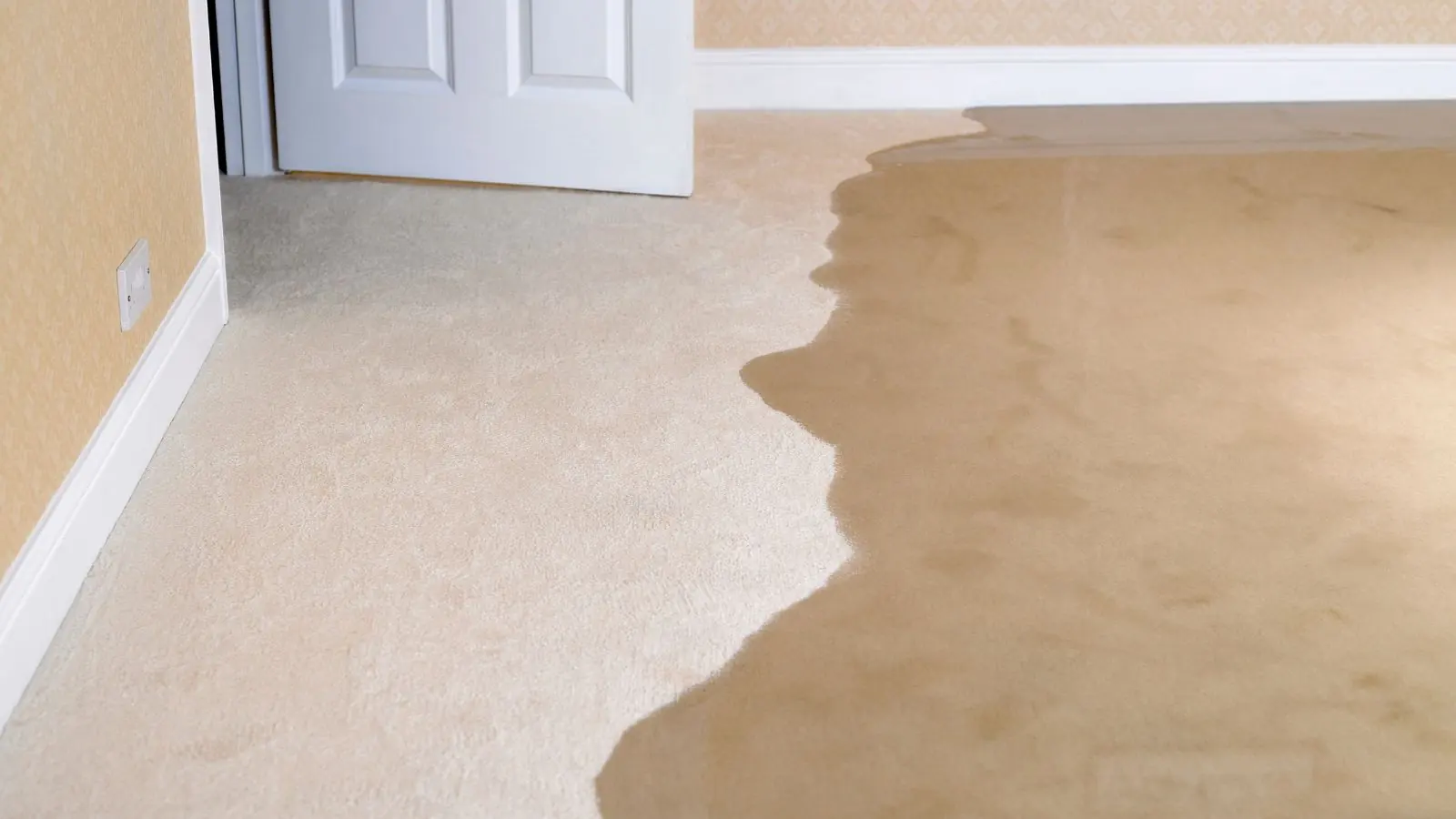
Carpet water damage in Colton, CA: three layers, three decisions
Carpet water damage is really three separate problems stacked on top of each other. The carpet face is the part you see. Under it sits the pad, which acts like a sponge, and below that is the subfloor, usually a concrete slab in Colton homes or plywood in upstairs units.
Each layer is judged on its own. Many Colton carpets can be dried and kept when the water was clean and the response was fast. The pad is a different story, because it holds water long after the surface feels dry, and it is the layer most often replaced.
The call to dispatch is where the decision starts. Tell us what leaked, how long the carpet has been wet and whether it is a rental or your own home, and a coordinator explains what is likely to stay and what is likely to go before any crew arrives.
Why carpet gets wet in Colton homes and apartments
The City of Colton runs its own water system, drawn entirely from wells, with more than 120 miles of pipe, according to the city's utilities page. That means most indoor leaks start on the private side of the meter: a supply line, a water heater, a washer hose or a leaking window frame in a storm.
Colton also has a large rental population. The 2020 Census counts about half of the city's occupied homes as renter-occupied, so wet carpet in an apartment or a rented house is common. Rentals often have carpet in bedrooms and living rooms over a slab, which means a leak can travel along the floor before anyone sees it.
The usual causes are a failed washer or dishwasher hose, a toilet supply line, an overflowing tub, a roof leak that runs down a wall, or water that enters under a door in heavy rain. Each source leaves carpet in a different condition, which drives the decision.
Dry in place or replace: the water category decides
The industry sorts water into three categories, laid out in the published ANSI/IICRC S500 reference for restoration work. The category is about what the water carried, not how much of it there is.
| Water source | Category in plain words | Usual carpet outcome |
|---|---|---|
| Broken supply line, clean tap water | Clean at the start | Often dried in place if reached fast, pad usually replaced |
| Washer or dishwasher overflow | Used water with soap or food residue | Carpet may be cleaned and dried, pad replaced |
| Toilet overflow with waste, or a sewer backup | Contaminated | Carpet and pad removed and discarded |
| Outdoor floodwater, storm runoff | Contaminated | Carpet and pad removed and discarded |
| Clean water left wet for a long time | Treated as contaminated | Carpet and pad often removed |
Clean water that sits can turn into a bigger problem. The EPA's mold guidance for schools and commercial buildings lists carpet and backing in its Table 1 with a target of drying within 24 to 48 hours. Mold may still have started even when drying met that window, and carpet kept wet longer is often replaced.
Wet carpet safety: the first hour
Safety comes first, and it is simple. Wet carpet over a slab can still carry current if a cord, an outlet or a baseboard heater is in the water.
- Stop the source: close the fixture shutoff or the main water valve, which is usually at the house side of the meter.
- Shut off power to the wet room only when you can get to a dry panel without stepping into the water. If you cannot, the electric utility or 911 gets the first call.
- If the water came from a toilet, sewer or outdoor flooding, stay off the carpet and keep children and pets away.
- Set furniture legs on foil squares or plastic blocks and carry electronics to a dry room.
- Photograph the carpet, the source and any ruined belongings before anything is moved.
Do not walk the wet carpet more than you must. Foot traffic pushes water into the pad and spreads dye from the backing into the fibers.
How we handle wet carpet
Meter and map
Meters and an infrared camera trace how far the water traveled, under walls and into baseboards included.
Extract
Extractors, either truck-mounted or portable, lift water out of the carpet face. Weighted wands press water out of the pad below.
Lift or float
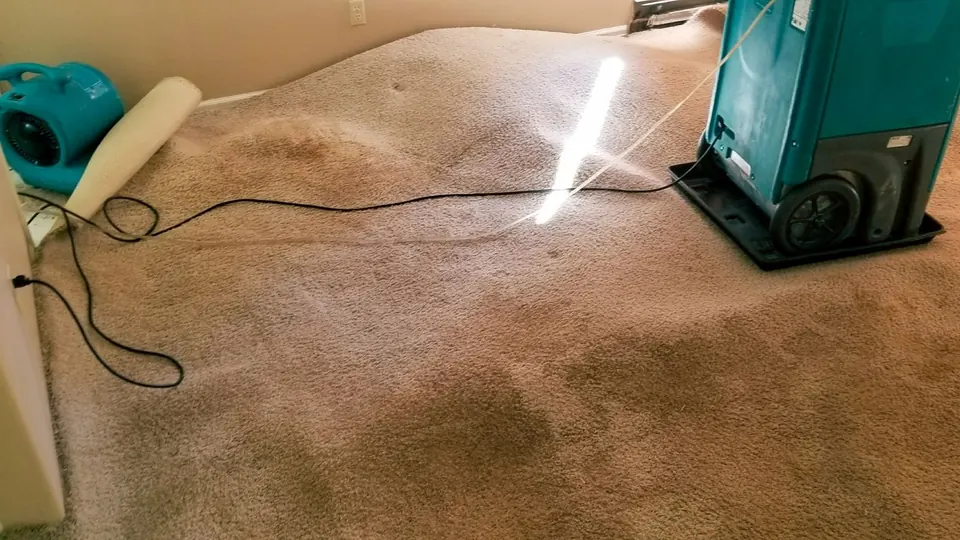
On a dry-in-place job, the carpet is released from the tack strip in part of the room, lifted slightly and supported on an air cushion so the pad and slab can dry.
Dry and verify
Air movers and LGR dehumidifiers stay running, and each visit adds readings to the log until carpet, pad and slab hit their drying target.
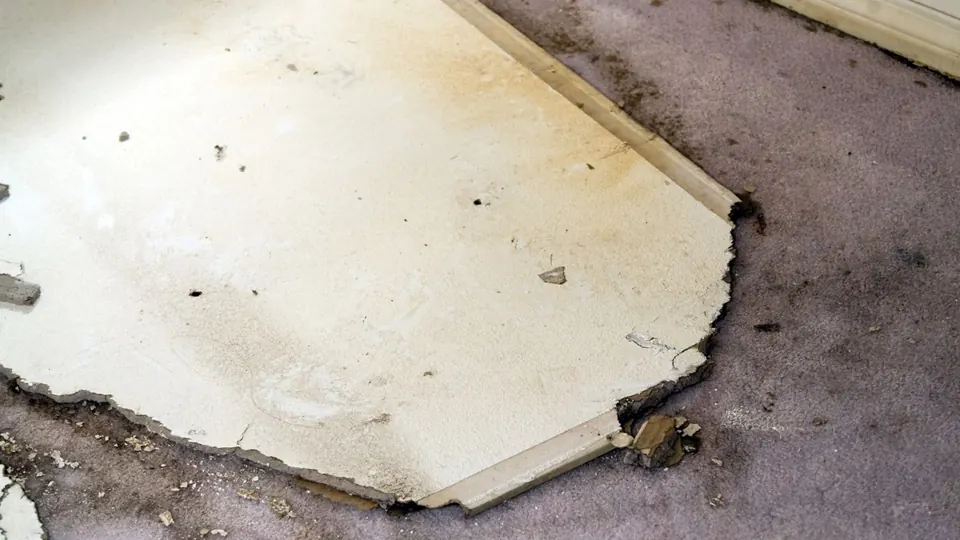
When the pad is removed, the crew cuts it into strips and bags it. The slab is checked for moisture before any new pad goes down, since sealed-in water leads to odor and mold.
Pad, tack strip and stretching
The pad is usually the first thing replaced, because it holds water deep inside its foam and dries slowly even with airflow. Pad is also less costly than carpet to replace, so the swap is common even when the carpet face is kept.
Tack strip, the wooden strips with small nails around the room edge, can swell and stain if wet for long. Crews inspect each strip and replace damaged ones. When carpet comes loose for drying, it must be re-stretched and secured afterward so it lies flat without ripples.
Wool, nylon and polyester behave differently when wet. Wool can lose dye or shrink in some cases, while nylon and polyester generally tolerate cleaning and drying well. The type of carpet, its age and its backing all enter the decision.
Odor and mold in wet carpet
Damp carpet smells within days because bacteria and mold feed on dirt and backing glue. A musty smell after drying can point to moisture left in the pad or the slab. A meter reading, not a smell, is how a crew knows the work is done.
Deodorizing helps only after the moisture is gone. Fogging a damp carpet hides the odor for a short time. If dark spots appear on the carpet backing or along the wall base, the case may belong with our mold remediation service rather than a simple drying job.
What changes the cost of a carpet job
Water category
Clean water makes drying in place likelier. Contaminated water means pulling the carpet out and hauling it away.
Time since the leak
Carpet that has been wet for days is harder to save and may need replacement.
Carpet type and backing
Natural and synthetic fibers and different backings react differently to water and heat.
Area and layers
A wet closet is a smaller job than a wet living room, and removal adds disposal and installation.
Rebuild and re-stretch
New pad, new tack strip and stretching add labor after the drying is finished.
The scope and price come before any work begins. To get yours, call and describe the room and the carpet.
Carpet and your policy
Per the state insurance department, homeowners coverage generally reaches sudden water damage that is not flood, while flood sits under a separate policy. A leak from a failed hose is often treated differently from slow seepage over months.
Renters should check their renter's policy for personal property and ask the landlord who handles the floor itself. Report the loss without delay, and the insurer rules on what is covered.
Mistakes to avoid with wet carpet
- Never run a household vacuum over wet carpet. It is not built for water and can create an electrical hazard.
- Do not leave a fan blowing across the surface while the pad stays wet underneath. The top dries and the bottom stays damp.
- Do not pull up carpet yourself in a contaminated loss. Handling it spreads germs through the house.
- Do not cover wet carpet with a rug or plastic, which traps moisture.
For wider cleanup of the room, our water damage cleanup page covers debris, and the structural drying page explains how slabs and walls are dried.
Nearby towns
Dispatch from Colton reaches neighboring towns. Calls from the Grand Terrace area and Loma Linda go through the same line, with the same process for carpet decisions.
Frequently asked questions
The line stays staffed overnight and on weekends. When a crew is free, it can come the same day. Have the water source and the length of time the carpet has been wet ready for the coordinator.
Often yes when the water was clean and the carpet is reached quickly. The pad usually has to be replaced, and carpet from a sewer backup or outdoor flooding is removed.
EPA guidance for schools and commercial buildings sets a 24 to 48 hour drying target for carpet and backing. Mold can still have begun inside that window, and past it the carpet and pad are more likely to be replaced.
Foam pad absorbs water and releases it slowly, and it can hold contaminants. Replacing it is often more reliable than trying to dry it.
Photograph the damage and let your landlord or property manager know as soon as you can. Responsibility depends on the lease and the cause, and we can document the readings.
Yes. After drying, the carpet is re-stretched and re-secured to the tack strip so it lies flat. Damaged tack strip is replaced first.
Yes. The slab or subfloor is metered and dried before new pad goes down. Sealing moisture in leads to odor and mold.