
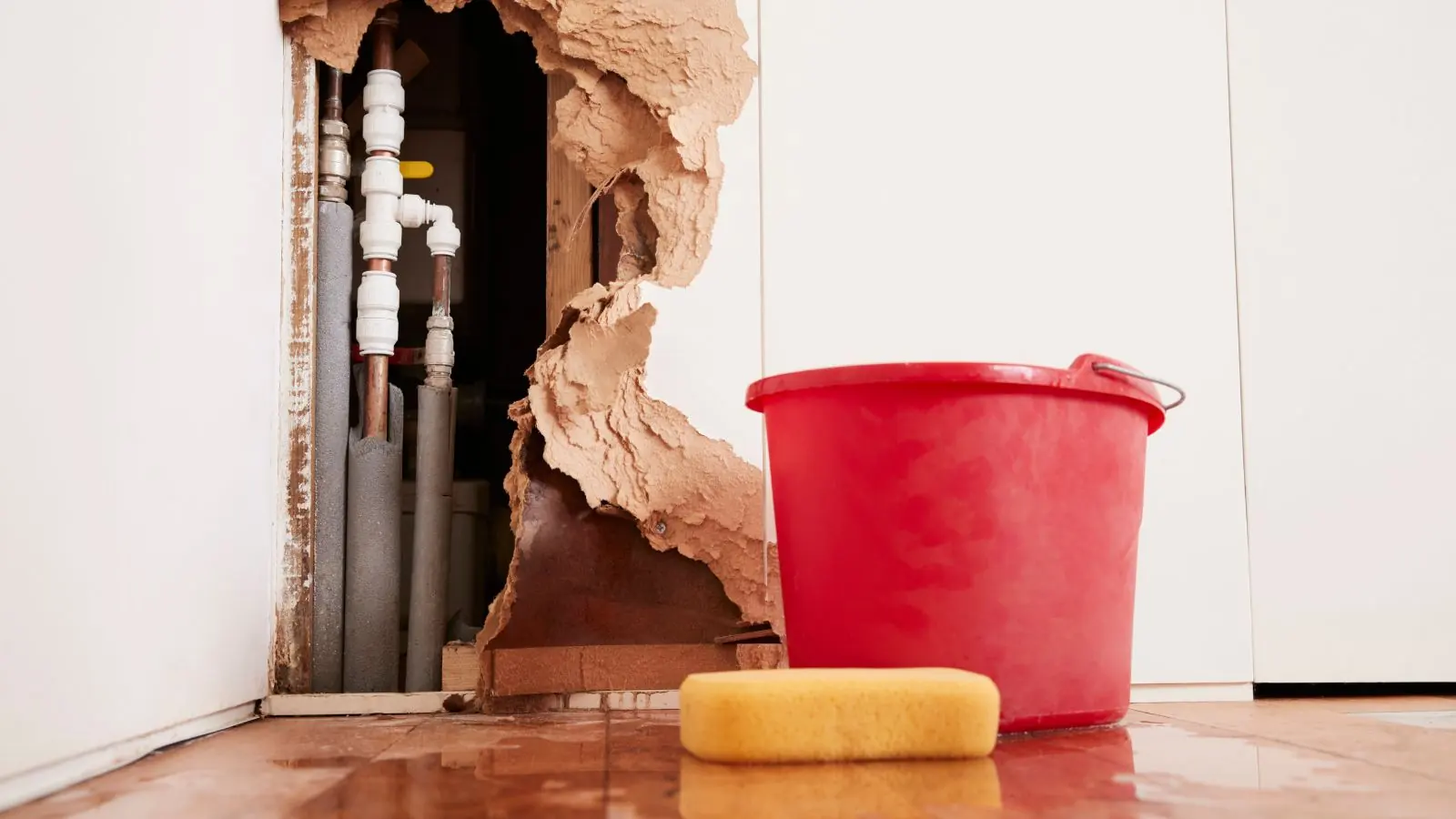
When a pipe bursts right now: what to do first
A burst pipe turns a quiet house into a flooded one fast, and the damage grows for as long as the valve stays open. Our 24/7 line takes emergency burst pipe calls in Colton, CA at night, on weekends and on holidays, and a free crew heads out that same day. Say which room is wet and whether you have found the shutoff.
Before anyone arrives, the most useful job is stopping the flow. Colton's water conservation tips advise residents to locate the private shut-off valve ahead of time, since closing it can prevent damage if a pipe bursts. Find it now, before you need it in a hurry.
Once the valve is closed, open one faucet at the lowest point of the house to drain what is left in the lines. Then photograph the wet areas, lift small items out of the water and stay away from anything electrical that is damp. The safety section below covers power and gas.
How pipes fail in Colton homes
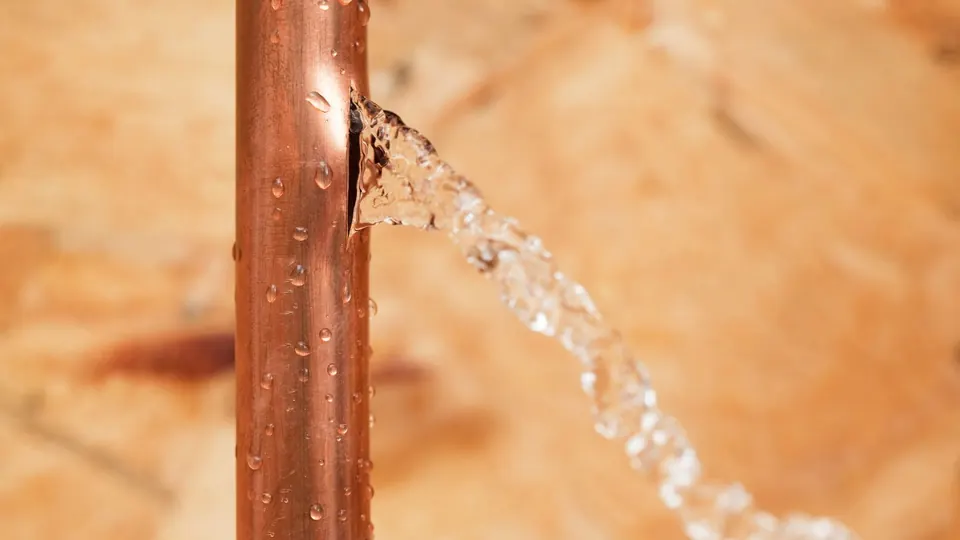
Most burst pipe calls fall into three groups. A fitting or supply line lets go suddenly and sprays. A pinhole in aging copper starts as a drip and widens over weeks. A joint in galvanized steel, still present in some older houses, rusts from the inside until a section gives out.
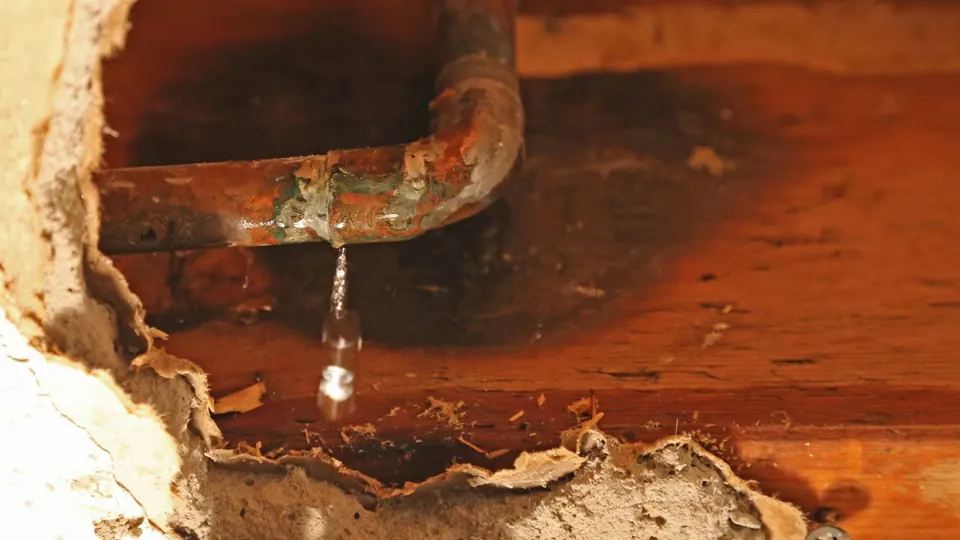
Plastic PEX tubing fails in other ways. It rarely corrodes, but a poorly seated crimp ring, a stretch cooked by attic heat or a nick from a drywall screw can open a leak at a connection. Where a pipe runs matters as much as what it is made of, since a failure inside a wall soaks drywall and insulation before a drip is ever seen.
Colton's tap water comes entirely from deep wells, according to the City's description of its water system, and the city runs its own reservoirs and booster plants. The supply does not run out on its own. A broken line keeps pouring until a valve is closed, which is why the first few minutes decide how much of the house gets wet.
Cold snaps: rare here, but not unheard of
Colton is not a freeze town, and ice bursts are far less common here than in colder states. NOAA's Climatography of the United States for San Bernardino, the neighboring city, lists about 4.9 days a year at or below 32 degrees Fahrenheit for 1971 to 2000, a January average low near 42 degrees and a record low of 17 degrees in January 1937.
That narrows the risk to a few spots. Exposed hose bibs, attic runs, garage supply lines on an outside wall and pipes in unheated side yards are the usual victims on a clear, cold night. Because freezing is uncommon in Colton, this page also covers the occasional cold-snap burst instead of splitting it onto a page of its own.
A frozen line often shows no damage until it thaws. The split opens as the ice melts, so a quiet pipe on a cold morning can start flowing by afternoon. If a faucet runs weak after a frosty night, close the main valve and look at the exposed runs before you try to thaw anything.
Burst pipe signs and what each one points to
| What you see | What it usually means | First move |
|---|---|---|
| Running water sound with every fixture off | A pressurized line is leaking or a joint has failed | Close the private shutoff and listen again |
| Bubbling or stained drywall low on a wall | Water has wicked up from a leak in the cavity or the floor below | Shut off the water, then call so the wall can be read with a meter |
| Warm or damp patch on a slab floor | A hot line may be leaking under the concrete, see slab leak damage | Shut off the water heater supply and call |
| Ceiling stain that spreads or sags | Water is collecting above, often from an attic or upstairs line | Stay clear, turn off the water and call |
| Meter dial moves with every fixture off | A leak exists somewhere past the meter | Close the private valve, and if the dial stops the leak is inside |
One clue rarely settles it. We pair your description with readings from a moisture meter and an infrared camera that reveal how far water has traveled behind paint, tile and baseboards.
Safety first: water, power and gas in the first hour
A burst pipe is a plumbing emergency and sometimes an electrical one. Work through these steps in order and stop if anything feels unsafe.
- Close the private shutoff valve at the house by turning it clockwise until it stops. If it is stuck or missing, call City of Colton customer service for help with the street-side valve.
- Switch off breakers for the wet rooms, but only when the panel sits on dry ground and you can walk to it without wading.
- If water is dripping from a light fixture, outlets are wet or you hear buzzing, stay out of the room and phone the electric utility or 911, then call our line afterward.
- If gas is in the air, go outside and phone SoCalGas or 911 from there.
- Keep a household vacuum away from standing water, and do not walk through a flooded room in bare feet.
- Photograph and film each wet surface before moving anything.
Call the utility first when power or gas is involved
Our crews dry and restore. We do not repair live wiring or gas lines. If electricity or gas is part of the picture, the utility or the fire department comes first, and we start work once the area is declared safe.
How we dry a burst pipe loss
The aim is to find every wet surface, not only the ones that look wet. Crews begin at the source and work outward, checking each material against a dry reference.
Confirm the source
Meters and an infrared camera trace the wet trail through walls, ceilings and flooring.
Pull the water out
Portable and truck-mounted extraction units remove standing water, and soaked carpet pad comes up.
Open what is trapped
Baseboards come off and wet drywall is cut at a clean line above the damp mark so the cavity can breathe.
Dry and confirm
Air movers run alongside LGR dehumidifiers, and crews log readings each visit until every material reaches the dry standard.
ANSI/IICRC S500 is the published industry reference we use when planning and recording the drying. Those readings become the drying record your insurer is likely to ask for. When the structure is dry, water damage repair puts back the drywall, paint and trim.
What changes the cost of a burst pipe job
How long the water ran
A line closed in minutes wets a floor. A line running overnight reaches walls, ceilings and the rooms below.
Which materials got wet
Tile and concrete dry quickly. Carpet pad, drywall, insulation and wood flooring take more labor and more equipment days.
Where the pipe sits
A supply line in an open garage is a short job. A pipe inside a finished wall or ceiling means opening and later rebuilding that surface.
Size of the affected area
Each room added to the loss means more extraction, more air movers and more drying days.
Water source and cleanliness
Water from a pressurized supply line is the easiest kind to handle, unlike water that has run through a drain or picked up soil.
Want a real figure? Call and describe the rooms, and the scope and price are laid out for you before work begins.
Insurance and burst pipes
Homeowners coverage often responds to a sudden, accidental release of water, while weeks of unnoticed seepage often falls outside it. In its residential claims guide, the state insurance department notes that non-flood water damage is generally covered and urges owners to report it right away.
The department's separate flood publication says a flood policy usually leaves out burst pipes inside the home, so your homeowners policy is the one to read first. Wording varies, so look at the policy text or put the question to your insurer.
Mistakes to avoid and how to prevent the next burst
- Waiting to see whether the stain grows. Wet drywall can be saturated long before it sags.
- Fixing the pipe and closing the wall. Insulation and paper-faced board stay wet in the cavity.
- Cranking the heat to dry the room. Warm, wet air inside a closed house just moves moisture around.
- Throwing out ruined items before photographing them for your records.
Prevention is mostly small habits. Turn the private shutoff valve a few times a year so it does not seize, replace corroded fittings when a plumber finds them, and wrap exposed pipes before a cold forecast. If a house has high or unstable pressure, ask a licensed plumber whether a pressure regulator makes sense.
Burst pipe response around Colton
Crews leave from Colton for homes and shops across the city and nearby towns. If the leak is in San Bernardino or Rialto, the same line and the same process apply. When walls stay wet for days, water mitigation keeps the drying controlled and measured.
Frequently asked questions
Burst pipes do not keep office hours, so neither does the line. It rings through day and night, and a free crew is sent the same day. Give the dispatcher the room, the water status and any electrical worries.
If electricity or gas is a factor, the utility or 911 comes first, and our call comes after.
No. A licensed plumber does the pipe repair. We extract the water, dry the structure and document the loss, and we can work alongside the plumber's schedule.
Often several days, and the moisture readings decide the end point, not the calendar. A tile floor dries sooner than a wall full of insulation.
Sometimes. If a meter and thermal camera show water trapped in a cavity, a section of drywall may be opened so the cavity can dry. If the wall reads dry, it stays closed.
A sudden burst is often covered, while long-running seepage often is not. Report the loss promptly, keep your photos and drying records, and ask your insurer how your policy reads.
Mold needs moisture, and drywall or carpet pad left damp for days gives it the conditions. Quick extraction and drying lowers the chance. If growth appears later, mold remediation starts by fixing the moisture source.
Notify the landlord or property manager at once, and photograph the damage before anything is cleared. Renters insurance generally protects your belongings, and the building itself falls to the owner.