
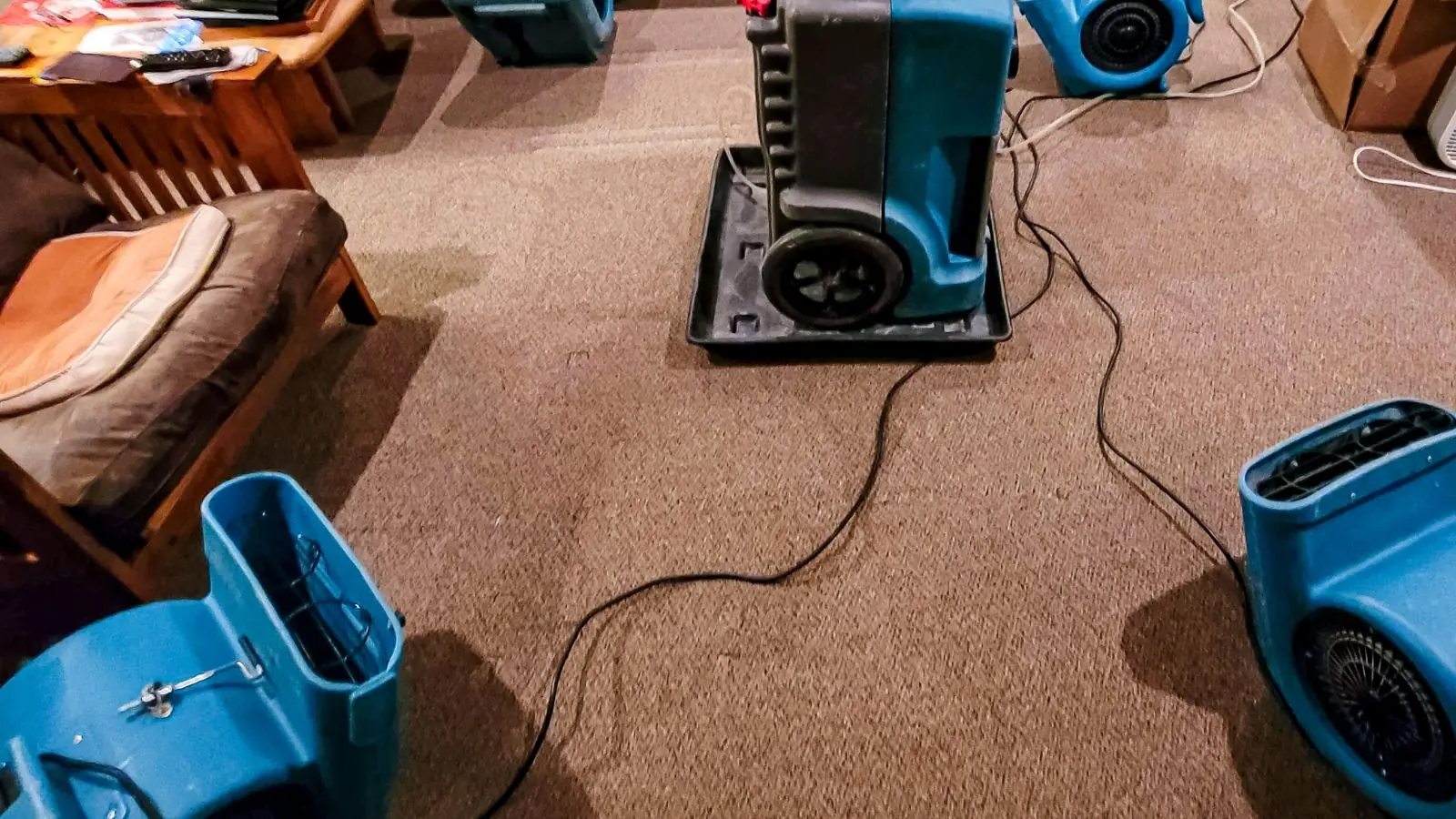
Structural drying and dehumidification in Colton, CA
Drying a structure means pulling moisture out of the parts of a building that hold it: studs, plates, subfloor, drywall, plaster and concrete. It uses moving air, dehumidifiers and daily meter readings. It is one stage of water mitigation, and this page goes deeper into how the drying itself is planned and checked.
Colton's climate helps and misleads at once. The July average high of 96.0 degrees in NOAA's 1971 to 2000 normals for the San Bernardino station shows how hot and dry summers run here. Dry summer air pulls moisture from open surfaces. A closed wall cavity or a slab under flooring does not get that benefit, and winter storm weeks bring damp air that slows everything down.
Our dispatch line is answered 24/7. If standing water remains, emergency water removal has to happen before any drying begins.
Drying in plain words: temperature, humidity and moisture content
Drying is a swap. Wet materials give up moisture to the air around them, and that air has to be drier than the material for the swap to work. Crews watch three numbers: the room temperature, the relative humidity and the grains of moisture per pound of air. The last one tells you how much water the air still holds, whatever the temperature.
A dehumidifier pulls that vapor out of the room. An air mover then pushes the dry air across wet surfaces so more moisture leaves the material. Run only fans and the vapor stays in the room and settles somewhere cooler, such as a closet wall. Run only a dehumidifier and the wet material dries slowly because air is not moving across it.
Equipment and where it goes
Air movers
Low, high-velocity fans aimed along walls and across floors. Placement follows the moisture map, not a rule of thumb.
LGR dehumidifiers
Low-grain refrigerant units that work well in warm, humid rooms and pull moisture to a low grain level.
Desiccant dehumidifiers
Used in cooler spaces or for deeper drying where refrigerant units slow down.
Cavity drying systems
Small holes or removed baseboards let directed air into wall cavities and under cabinets so drywall can sometimes stay.
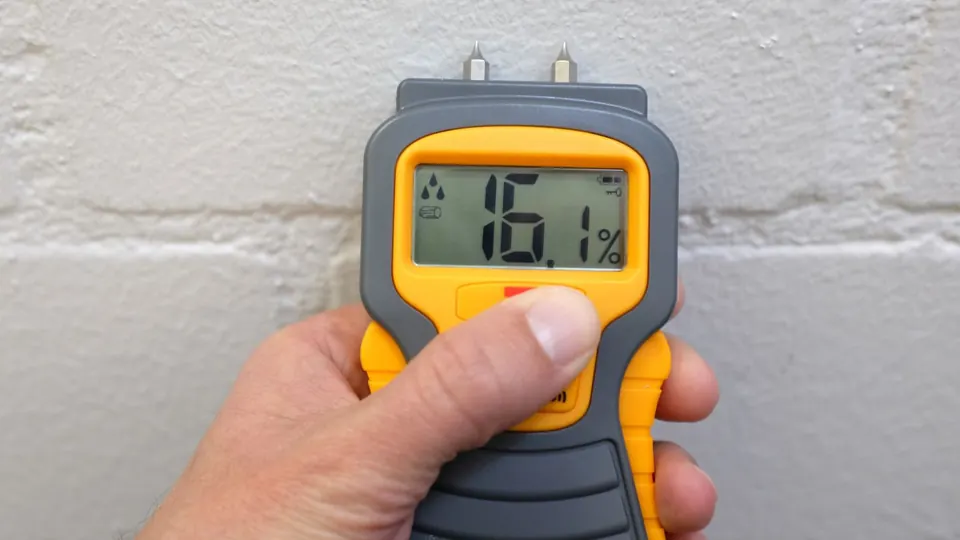
Moisture meters read wood, drywall and concrete. A thermal imaging camera shows cooler patches that suggest wet material behind paint. Neither tool replaces the other, which is why both go into the first visit.
How we decide what dries in place and what comes out
| Material | Usual drying approach | When it comes out instead |
|---|---|---|
| Drywall | Air movers on the surface, cavity drying through small holes | Swollen, delaminated or contaminated board |
| Framing and plates | Air movers and dehumidification until readings match dry framing | Rare, only when rot or contamination is present |
| Plywood subfloor | Air movers, sometimes with floor mat systems | Swelling, delamination or an odor that stays |
| Hardwood flooring | Specialty floor drying panels and dehumidification | Cupping or crowning that does not settle |
| Concrete slab | Dehumidification, air movement across the surface | Rarely, the slab stays and the finish above it is replaced |
| Carpet pad and insulation | Rarely dried, removed in most cases | Almost always |
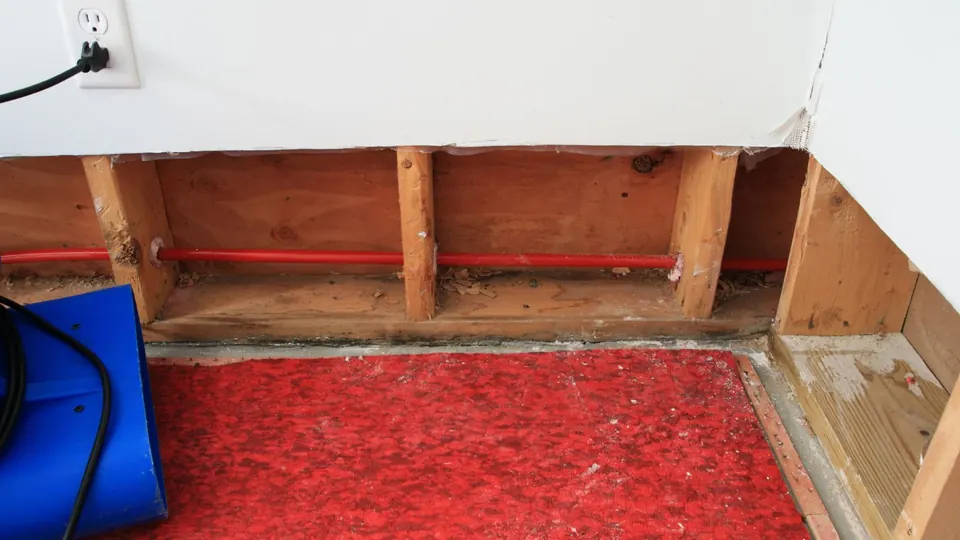
Saving material is the point of drying, but not at any cost. If readings stay high after a reasonable time, a wall is opened further. That decision is explained before it happens.
Moisture readings, monitoring visits and the drying log
Day one sets the baseline. The crew records readings on affected materials and takes a reading from an unaffected area of the same material in your home. That second number is the dry standard. Drying is complete when the wet material reads close to it.
A technician returns daily or at set intervals, moves equipment as areas dry, and writes down the readings. ANSI/IICRC S500, a published reference, treats monitoring and documentation as part of drying, and our log follows that approach.
The log lists dates, temperatures, humidity, grains per pound, material readings and the equipment in each room. It tells you when to expect the equipment to leave. It is also the document an adjuster tends to ask for.
Electrical and equipment safety while drying runs
- Wet outlets, a wet appliance or a wet panel, or any gas odor, mean leaving and phoning 911 or the utility ahead of us.
- Shut off the water source before drying starts. Drying a wall that is still wet from a leak only wastes days.
- Do not unplug or move the equipment. Crews check the circuit load so breakers do not trip overnight.
- Keep cords out of walkways and keep children and pets away from running units.
- Close interior doors as the crew sets them. The plan relies on a controlled room.
Drying equipment is loud and warm. That is normal. A unit that goes quiet, or a room that gets cold and damp, is worth a call to the dispatch line.
What changes the cost of structural drying
Drying costs follow equipment and days, and both depend on readings. The scope is explained before the first unit is set.
Affected area
Square footage and number of rooms set the equipment count.
Materials and construction
Concrete, plaster, hardwood and insulated walls dry at different speeds.
Starting conditions
How wet the building is, and whether the loss is a few hours or a few days old, changes the plan.
Days on site
Cool, humid weather in a storm week can extend drying.
Rebuild afterward
Replacing material that could not be dried is separate from the drying.
Drying records and your policy
Policies tend to pay for sudden, accidental water damage and push back on slow leaks and neglect. Flood is typically a separate policy, as the state regulator's guidance points out. Raise the question with your insurer and report the loss early.
The drying log, photos and readings are the records most adjusters ask for. No claim outcome can be promised from here.
What drying protects in Colton homes
US Census QuickFacts for 2020 to 2024 put the owner-occupied rate in Colton at 52.8 percent and the median owner-occupied value at $443,800. For many owners, hardwood, cabinets and built-ins are the largest finish costs. Drying them before they swell can be the difference between a repair and a replacement.
Rebuilding opened walls or subfloor can raise permit questions, and the Building and Safety Division at the City of Colton is the office that answers them before work begins.
Drying errors and how to avoid a second loss
- Turning up the heat to dry a room. Warm, wet air feeds mold.
- Removing equipment because the surface feels dry. Readings in the cavity say otherwise.
- Using a household dehumidifier alone and calling it done.
- Skipping the leak repair, so the structure gets wet again.
Fix the source, ask for the drying log, and keep a copy. If dampness lingered, a mold assessment is the next step. After drying, the cleanup and repair stages finish the job.
Drying crews near Colton
We dry structures in Colton and in nearby places such as Loma Linda and Bloomington. The method is the same wherever the loss is. Only the building changes.
Frequently asked questions
At any hour. Dispatch is staffed overnight and on weekends, and a free crew goes out that same day. Share the rooms, the materials and when the water arrived.
Many losses dry in about three days, and some need longer. The readings decide, not the calendar, and the technician explains what the numbers show at each visit.
Fans alone move vapor from one place to another. Dehumidifiers pull it out. In Colton's cool, damp storm weeks, open windows can add moisture.
We compare readings on the wet material with a reading from the same material in an unaffected part of your home. When they match, the material is considered dry.
Often yes. Small holes or a removed baseboard let directed air into the cavity. If readings do not fall, the wall is opened.
Consumer units pull far less moisture and are not matched to the room. Pro air movers and LGR or desiccant units are sized to the moisture map and monitored.
Drying quickly lowers the risk, because mold needs moisture. It does not erase a problem that was already growing, which is why wet materials left for days may need an assessment.